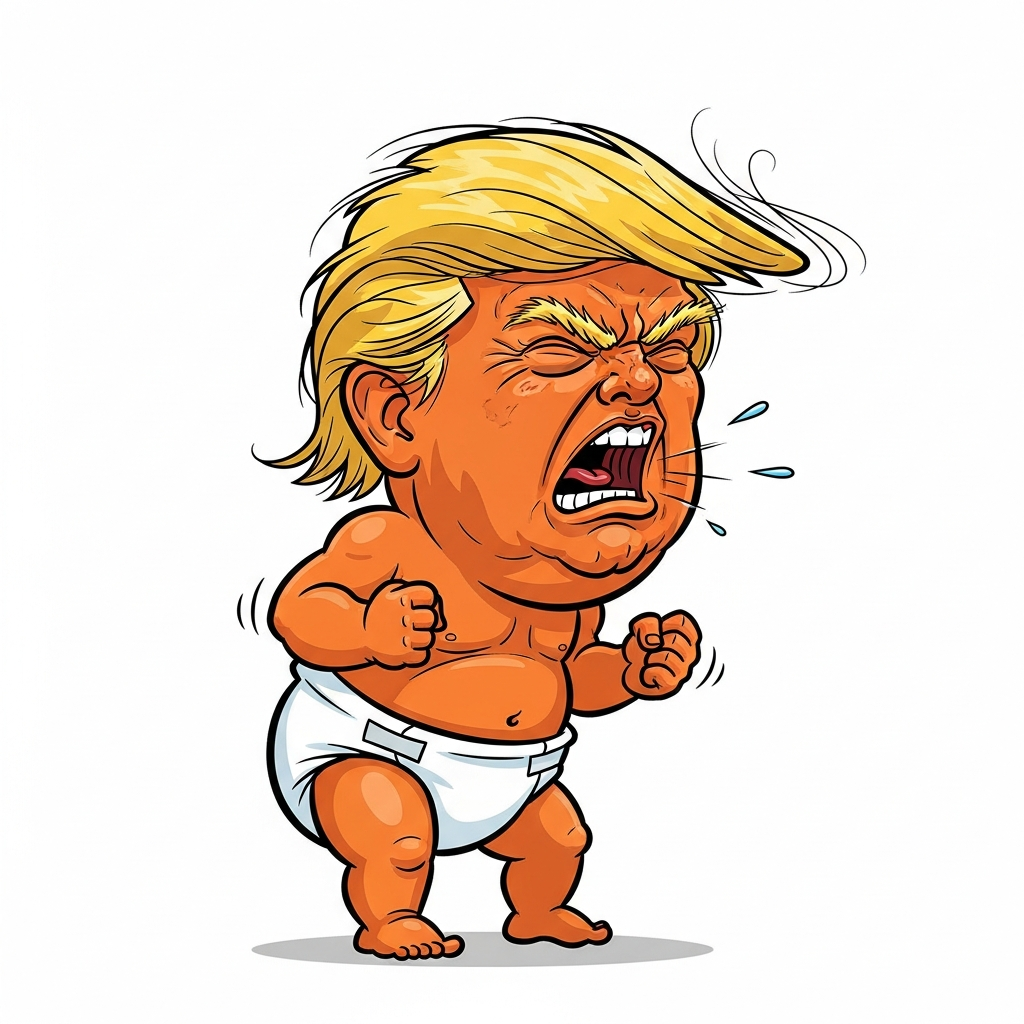
Trump's Charity Is Forced to Dissolve After Years of Self-Dealing
Under court supervision and after a state lawsuit detailed 'a shocking pattern of illegality,' the Donald J. Trump Foundation agreed to dissolve, distribute its remaining $1.78 million in assets to other charities at the New York Attorney General's direction, and submit Trump and his children to ongoing legal restrictions on charitable activity in the state.
A Charity in Name Only
On December 18, 2018, New York Attorney General Barbara Underwood announced that the Donald J. Trump Foundation had signed a stipulation agreeing to dissolve under judicial supervision. The Foundation’s remaining $1.78 million in assets would be distributed only to charities approved by her office. Underwood described the case as “a shocking pattern of illegality involving the Trump Foundation — including unlawful coordination with the Trump presidential campaign, repeated and willful self-dealing, and much more.” The Foundation, she said, had functioned as “little more than a checkbook to serve Mr. Trump’s business and political interests.”
The dissolution was the first of three escalating outcomes. The state’s underlying lawsuit, filed in June 2018 against Trump personally and his three eldest children — Donald Jr., Ivanka, and Eric, all of whom served as Foundation directors — continued after the shutdown. In November 2019 a New York Supreme Court justice ordered Trump to pay $2 million in damages for misusing Foundation funds, and in the December 2019 settlement Trump personally admitted to illegal acts and agreed to ongoing legal restrictions on serving in any future New York charity.
What the Charity Actually Did
The state’s filings, drawn from years of investigation by then-AG Eric Schneiderman’s office and continued by Underwood and Letitia James, documented a Foundation that ran almost entirely as an extension of Trump’s personal and political interests:
- A $10,000 Foundation check went to a charity auction in 2014 to buy a six-foot oil portrait of Trump that was later hung at one of his hotels.
- A $25,000 Foundation contribution was sent in 2013 to a political committee supporting Florida Attorney General Pam Bondi while her office was reviewing fraud complaints against Trump University. Bondi’s office subsequently declined to investigate.
- The Foundation paid $158,000 to settle a lawsuit against Trump’s Mar-a-Lago club arising from a charity golf tournament, and $100,000 to settle a separate suit involving Trump’s Westchester golf club — both expenses incurred to benefit Trump’s for-profit businesses, not the Foundation’s stated charitable purposes.
- The January 2016 “veterans fundraiser” Trump staged in Iowa to upstage a Republican primary debate raised $2.8 million, and the Foundation handed the campaign complete control over which veterans groups received the money, when they received it, and how the announcements were timed for political advantage. Trump’s own campaign manager Corey Lewandowski emailed Foundation officials with the donation schedule.
In the 2019 settlement, Trump personally admitted these facts on the record.
Patronage Disguised as Philanthropy
The Trump Foundation was created in 1988, ostensibly to support charitable causes. In practice, it was a small operation — usually under $2 million in assets, with no professional staff — whose primary function over time was to launder routine business and political expenditures through the prestige and tax advantages of a 501(c)(3). The Washington Post’s David Fahrenthold, whose Pulitzer-winning reporting in 2016 cracked the story open, documented that Trump’s own contributions to the Foundation had dried up entirely in 2009; nearly all subsequent donations came from other donors who likely believed their money was supporting charity rather than buying Trump portraits or settling his lawsuits.
The IRS had ample notice. The Foundation had paid a $2,500 excise tax in 2013 after the Bondi contribution was flagged as an illegal political donation by a tax-exempt organization. No further enforcement followed. It took a New York state investigation, a Pulitzer-winning reporter, and the political glare of a presidential campaign to force the closure of an entity that had been quietly violating the rules for years.
The Pattern the Foundation Reveals
Every defining feature of the Trump business model is present in miniature in the Foundation case: the use of a legal entity for purposes other than its stated mission, the routine self-dealing, the comingling of political and personal spending, the family members serving as nominal directors who signed off on what state regulators called “willful” violations. The same pattern — at vastly larger scale — drove the New York civil fraud judgment that came five years later, in which Trump and the Trump Organization were found liable for $355 million plus interest after a court determined the company had inflated asset valuations to defraud lenders and insurers.
The Foundation case is the early dress rehearsal. A small charity, a few million dollars, a handful of admitted acts of self-dealing — and a Trump who was simultaneously the sitting President of the United States, paying a $2 million judgment from his own bank account for using a tax-exempt charity as a personal slush fund. The dissolution did not change his behavior. It documented it under oath.
Sources
- A.G. Underwood Announces Stipulation Dissolving Trump Foundation Under Judicial Supervision — New York State Office of the Attorney General, December 18, 2018
- Trump Foundation To Dissolve Amid New York Attorney General's Investigation — NPR, December 18, 2018
- Trump Foundation agrees to dissolve with judge to oversee dispersal to other charities — NBC News, December 18, 2018
- Embattled Trump Foundation forced to shut down after 'egregious pattern of illegality' — ABC News, December 18, 2018
- Donald J. Trump Pays Court-Ordered $2 Million For Illegally Using Trump Foundation Funds — New York State Office of the Attorney General, December 10, 2019
- Trump ordered to pay $2 million to charities over misuse of foundation — The Washington Post, November 7, 2019