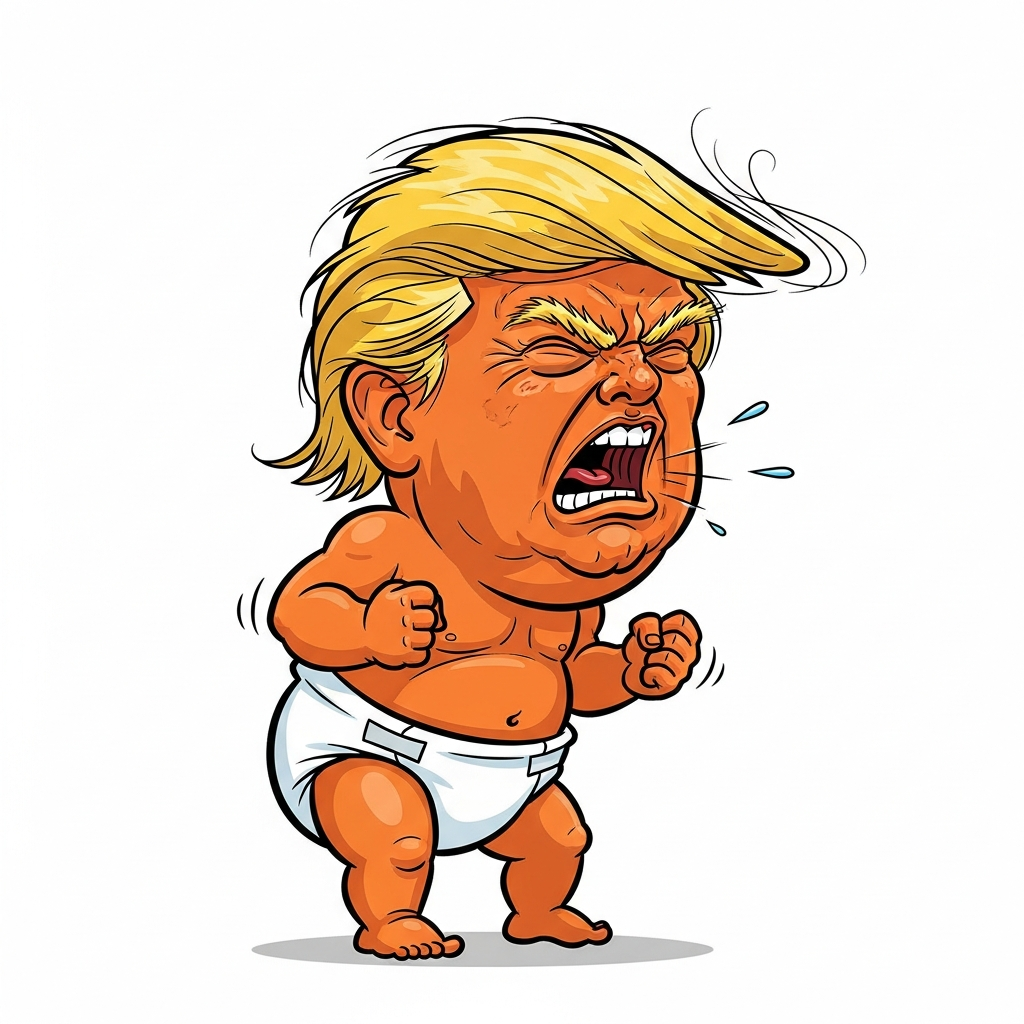
Trump's 35-Day Shutdown: Longest in U.S. History, Triggered Over Border Wall
Trump shut down the federal government for 35 days — the longest shutdown in U.S. history — after demanding $5.7 billion for a border wall Mexico was supposed to pay for. Roughly 800,000 federal workers went without paychecks, TSA officers visited food banks, the economy lost an estimated $3 billion, and Trump ended the standoff with nothing to show for it but a fake national-emergency declaration.
At midnight on December 22, 2018, the U.S. federal government partially shut down because Donald Trump refused to sign an appropriations bill that did not include $5.7 billion for a wall along the Mexican border. The Senate had unanimously passed a stopgap funding measure two days earlier — until Trump, blistered by right-wing media for “caving,” reversed himself and vowed to veto anything without wall money. The shutdown that followed lasted 35 days, the longest in American history, and ended on January 25, 2019 with Trump signing the same kind of bill he had refused for a month, with no wall funding in it.
He shut down the government, hurt 800,000 federal workers, broke an American record, and lost.
The Hostage-Taking
The mechanics were straightforward. House Democrats, who had just won back the majority in the 2018 midterms, refused to fund a wall the candidate Trump had promised over and over that Mexico would pay for. Trump demanded the money anyway and held nine federal departments hostage to get it: Agriculture, Commerce, Justice, Homeland Security, Housing and Urban Development, Interior, State, Transportation, and Treasury. Roughly 800,000 federal employees were either furloughed or required to work without pay. In an Oval Office meeting before the shutdown began, Trump told Nancy Pelosi and Chuck Schumer on camera: “I am proud to shut down the government for border security… I will take the mantle. I will be the one to shut it down.”
He took the mantle. Then he spent the next month blaming Democrats.
The Damage
The Congressional Budget Office estimated the shutdown cost the U.S. economy $11 billion, with about $3 billion permanently lost. But the human cost was the more visible one:
- TSA officers missed paychecks and called in sick at rates that forced terminal closures and security-line chaos at major airports.
- Air traffic controllers worked without pay through the holidays; a sick-out at facilities in New York, Washington, and Jacksonville triggered a ground stop at LaGuardia on January 25 that paralyzed Northeast air travel — and was the proximate cause of Trump folding hours later.
- Federal workers visited food banks in jurisdictions across the country, including IRS auditors, Coast Guard families (the Coast Guard reports to DHS, which was shut down), and museum staff at the Smithsonian.
- Federal contractors, who unlike federal employees do not receive backpay after a shutdown, lost wages permanently.
- Tax refunds, food-stamp processing, FDA food inspections, EPA enforcement, and national-park operations were all disrupted or curtailed.
Trump’s commerce secretary, billionaire Wilbur Ross, said publicly he didn’t “really quite understand why” federal workers without paychecks were going to food banks instead of taking out loans. It was the perfect distillation of the administration’s contempt for the people it had just stopped paying.
The Climbdown
On January 25, with airport disruptions cascading and his approval rating sinking, Trump endorsed a three-week stopgap bill with no wall funding and reopened the government. Negotiations that followed produced a final spending agreement with $1.375 billion for border barriers — less than a quarter of what Trump had shut down the government to demand, and earmarked for fencing, not a wall.
Twenty-four hours later, Trump declared a national emergency on the southern border, an obvious legal contrivance to redirect Pentagon construction funds toward the wall he had failed to extract from Congress. There was no emergency; illegal border crossings were near multi-decade lows at the time. The maneuver was an explicit end-run around the constitutional power of the purse, and federal courts later found that some of the diversions exceeded statutory authority. By the time he left office, fewer than 80 miles of new primary barrier had been built along the entire 1,954-mile border, almost all of it replacing existing fencing.
The Pattern
The 2018-2019 shutdown set the template for how Trump would treat governance for the next eight years. He used a basic function of government — keeping the lights on — as leverage to extract a policy concession Congress had refused to grant. When the leverage failed, he declared an emergency to seize the money anyway. He showed indifference to the suffering of the federal workforce. He lied about who was responsible. And when it ended in humiliation, he claimed victory.
Five years later, in his second term, that same playbook would expand into something more dangerous. Instead of shutting down agencies to coerce Congress, he would simply fire their employees, dissolve their structures, and dare the courts to stop him. The shutdown was the trial run. The country failed to learn from it.
Sources
- 2018–2019 United States federal government shutdown — Wikipedia, February 1, 2025
- Government shutdown could become longest ever as Trump says he 'won't be extorted' by Democrats — PBS NewsHour, January 11, 2019
- The government shutdown is now the longest in U.S. history. See how it compares — NPR, November 5, 2025
- Government Shuts down for 35 Days — HistoryCentral, January 25, 2019