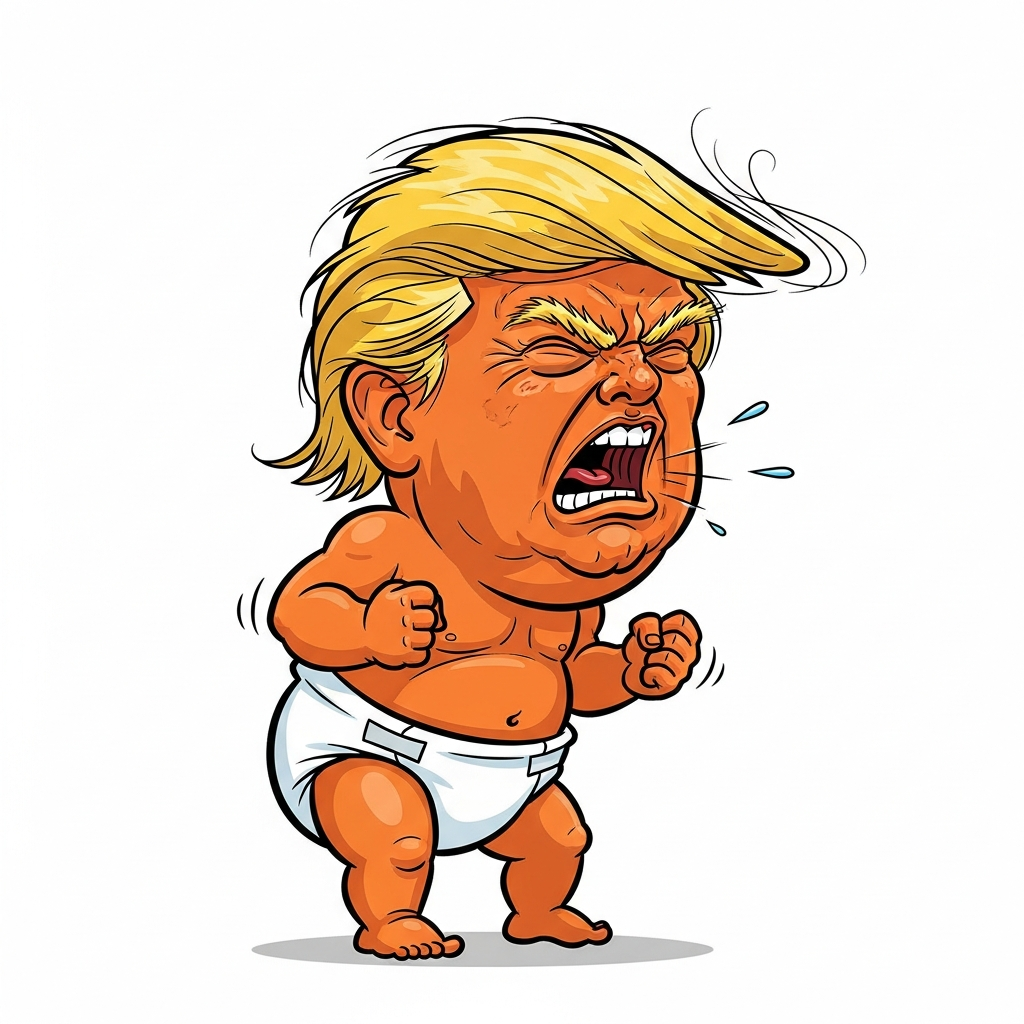
Dobbs Overturns Roe: Trump's Three Justices End the Constitutional Right to Abortion
On June 24, 2022, the Supreme Court ruled 5-4 in Dobbs v. Jackson Women's Health Organization that the U.S. Constitution does not protect a right to abortion, overturning Roe v. Wade after nearly 50 years. The majority was supplied by Trump's three appointees — Neil Gorsuch, Brett Kavanaugh, and Amy Coney Barrett — each of whom had told the Senate under oath that Roe was settled precedent. Trump immediately took credit, calling Dobbs 'the biggest WIN for LIFE in a generation.'
A Right Taken Away
On Friday, June 24, 2022, the Supreme Court of the United States issued its opinion in Dobbs v. Jackson Women’s Health Organization, holding by a 5-4 vote that the U.S. Constitution confers no right to abortion. The decision overturned Roe v. Wade, decided in 1973, and Planned Parenthood v. Casey, decided in 1992 — the two precedents that, together, had recognized abortion as a constitutional liberty for nearly half a century. Within hours of the ruling, “trigger laws” already on the books in thirteen states snapped into effect; within weeks, abortion was banned outright or near-totally in roughly a third of the country.
Justice Samuel Alito wrote the majority opinion. The five justices in the majority were Alito, Clarence Thomas, Neil Gorsuch, Brett Kavanaugh, and Amy Coney Barrett. Chief Justice John Roberts concurred only in the narrower judgment upholding Mississippi’s 15-week ban; he refused to sign on to overturning Roe outright. The three liberal justices — Stephen Breyer, Sonia Sotomayor, and Elena Kagan — wrote a joint dissent that warned, with what would prove to be precision, that “no one should be confident that this majority is done with its work.”
Three of the five justices in the majority — a clear, decisive majority of the majority — were appointed by Donald Trump.
The Promise He Kept
Trump ran in 2016 explicitly on overturning Roe. In a debate with Hillary Clinton in October 2016, he said the question would be settled “automatically” if he were able to put two or three justices on the Supreme Court. He told evangelical leaders the same thing in private. He outsourced his Supreme Court list to the Federalist Society and Heritage Foundation precisely so primary voters could see, in advance, the names of judges committed to ending Roe.
He delivered. Neil Gorsuch was confirmed in 2017 to the seat Mitch McConnell held open by refusing for nearly a year to consider Merrick Garland. Brett Kavanaugh was confirmed in 2018 after a confirmation hearing dominated by Christine Blasey Ford’s sexual-assault allegations. Amy Coney Barrett was rushed through in October 2020, eight days before the presidential election Trump was about to lose, to fill the seat of Ruth Bader Ginsburg, who had died in September. McConnell ran the Barrett confirmation on a timetable that would have been unthinkable for anyone other than a justice expected to overturn Roe.
The Sworn Promises They Broke
All three Trump appointees told the Senate Judiciary Committee, under oath, during their confirmation hearings, that Roe v. Wade was settled precedent and was entitled to deference under the doctrine of stare decisis.
Gorsuch in 2017: Roe is “the law of the land” and “a precedent of the United States Supreme Court,” entitled to “all the considerations of stare decisis.”
Kavanaugh in 2018: Roe is “an important precedent of the Supreme Court,” reaffirmed in Casey, and “entitled to the respect under principles of stare decisis.” He told Senator Susan Collins, in private, that he considered Roe “settled law.”
Barrett in 2020: Roe was a “super-precedent” only in the sense that it had not been overruled — a verbal hedge that, in retrospect, told senators what was coming if they had been listening.
Five years, four years, and twenty-two months after each of those statements, the same three justices voted to overturn Roe.
Trump Takes the Credit
Trump issued a public statement within hours of the Dobbs ruling. “Today’s decision, which is the biggest WIN for LIFE in a generation,” he said, “along with other decisions that have been announced recently, were only made possible because I delivered everything as promised, including nominating and getting three highly respected and strong Constitutionalists confirmed to the United States Supreme Court.”
He has repeated the boast many times since. In May 2023, on CNN, he said: “I was able to kill Roe v. Wade.” During the 2024 campaign, when polling showed the issue hurting him, he tried to soften his position — saying abortion should be left to the states, refusing to back a federal ban — but he never disowned the credit. He could not. The trade was the entire point of his alliance with the Christian right.
A Pattern, Not an Aberration
Dobbs is the most consequential single piece of Trump’s first-term legacy. It is also a template. The same playbook — pack the courts with hand-picked, vetted ideologues; have them swear under oath that they will respect precedent; let them overturn the precedent the moment they have the votes — has been turned on voting rights, on the administrative state, on regulatory power, and is now being turned on the structure of executive power itself in Trump’s second term.
The dissent in Dobbs warned that the majority’s reasoning, if taken seriously, threatens contraception, same-sex intimacy, and same-sex marriage. Justice Thomas, in a concurrence, said the quiet part out loud: those precedents should be reconsidered next. The three Trump justices did not join Thomas’s concurrence, but they have not repudiated it either. Tens of millions of Americans now live under abortion bans they had no say in passing, in states whose legislatures were drawn under maps the same Court had earlier insulated from federal review. That is the world Trump promised in 2016 and delivered in 2022. He calls it a win. The dissent calls it what it is: the first time in American history that the Supreme Court has taken a fundamental constitutional right away.
Sources
- Dobbs v. Jackson Women's Health Organization, slip opinion — Supreme Court of the United States, June 24, 2022
- Trump takes credit for end of Roe v. Wade after his 3 Supreme Court justice picks vote to void abortion rights — CNBC, June 24, 2022
- What Gorsuch, Kavanaugh and Barrett Said About Roe at Confirmation Hearings — FactCheck.org, May 4, 2022
- Trump: 'I was able to kill Roe v. Wade' — NBC News, May 8, 2023
- Dobbs v. Jackson Women's Health Organization — Wikipedia, December 1, 2024