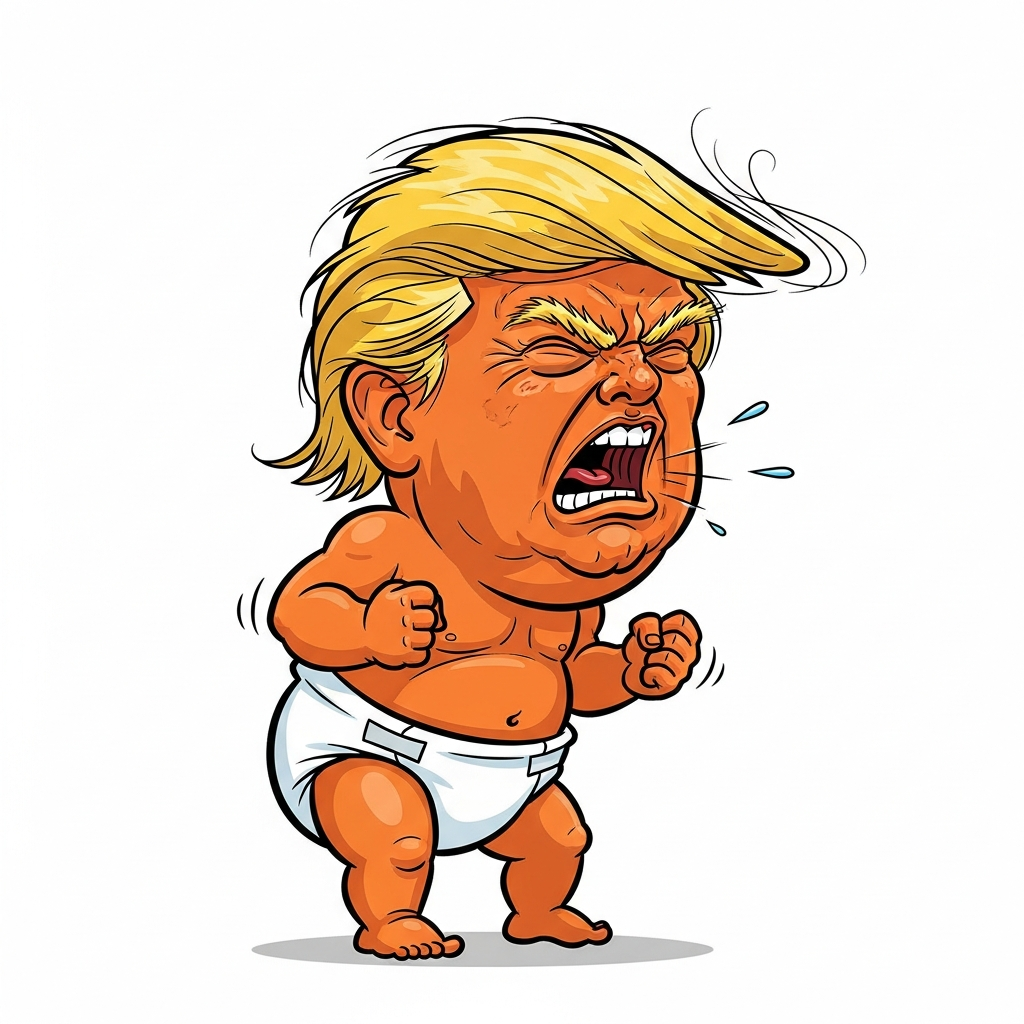
Supreme Court Invents Presidential Immunity, Placing Trump — and the Office — Above the Law
In a 6-3 decision along partisan lines, the Supreme Court granted presidents sweeping immunity for 'official acts' — a doctrine found nowhere in the Constitution that gutted the federal January 6 prosecution and, in Justice Sotomayor's words, made the president 'a king above the law.'
A Doctrine Written to Save One Man
On July 1, 2024, the Supreme Court handed Donald Trump the most consequential legal victory of his life. In Trump v. United States, the Court’s six Republican-appointed justices ruled that former presidents enjoy sweeping immunity from criminal prosecution for their “official acts.” Chief Justice John Roberts, writing for the majority, laid out three tiers: absolute immunity for a president’s “core” constitutional powers, at least presumptive immunity for anything within the “outer perimeter” of official responsibility, and no immunity only for purely private conduct.
The Constitution says nothing about presidential immunity from criminal prosecution. No prior Court had ever recognized it, because until Trump, no former president had ever been criminally charged. Faced with the first indictment of an ex-president in American history, the Court did not find immunity in the text. It manufactured it.
Gutting the January 6 Case
The immediate target was Special Counsel Jack Smith’s prosecution of Trump for conspiring to overturn the 2020 election. Trump had been indicted on four counts for a scheme that culminated in the January 6 attack on the Capitol: pressuring the Justice Department to lend false legitimacy to fraud claims, leaning on Vice President Mike Pence to reject electoral votes, assembling fake slates of electors, and inciting a mob from the Ellipse.
Roberts’ opinion swept much of this off the table. Communications with the Justice Department, he wrote, are core executive functions — absolutely immune, full stop. Trump’s pressure on Pence was presumptively immune. And in a passage with staggering reach, the majority held that prosecutors may not even introduce evidence of immune official acts to prove other crimes, because doing so would “eviscerate the immunity we have recognized.” The Court then remanded the case to sort out which acts were “official” — a process guaranteed to run past the November 2024 election. It did. Trump won, and the case died.
”A King Above the Law”
The three Democratic-appointed justices dissented with unusual fury. Justice Sonia Sotomayor, joined by Justices Kagan and Jackson, warned that the ruling reshaped the presidency into something the founders fought a revolution to escape. “In every use of official power,” she wrote, “the President is now a king above the law.” She ran through the doctrine’s logic to its conclusion: a president who orders the military to assassinate a political rival, who organizes a coup to stay in power, or who takes a bribe for a pardon might now be shielded — “Immune, immune, immune.” She closed: “With fear for our democracy, I dissent.”
Justice Ketanji Brown Jackson called the majority’s reasoning “a five-alarm fire” that “undermines the constraints of the law as a deterrent for future Presidents.” Roberts dismissed the dissents as fearmongering. But he could not point to a single word of constitutional text supporting the immunity he had just conjured.
The Pattern
The ruling was the capstone of a strategy Trump had run for years: not to win in court on the facts, but to delay, appeal, and outlast the clock until an election or a friendly judge made the charges disappear. He had already watched his classified-documents case dismissed by a judge he appointed. Now the Court he had reshaped — three of its nine members were his own nominees — rewrote the meaning of the presidency to spare him accountability for trying to overthrow an election.
The practical effect was to tell every future president that the criminal law is optional so long as the crime can be dressed as an official act. A man who incited an insurrection to keep power he had lost was not merely let off the hook; he was told, by the highest court in the land, that the office he sought to seize would place its next occupant beyond the reach of ordinary justice. Four months later, voters returned that man to it.
Sources
- Justices rule Trump has some immunity from prosecution — SCOTUSblog, July 1, 2024
- Trump v. United States, No. 23-939 (Opinion of the Court) — Supreme Court of the United States, July 1, 2024
- Breaking down the Trump immunity decision — National Constitution Center, July 2, 2024