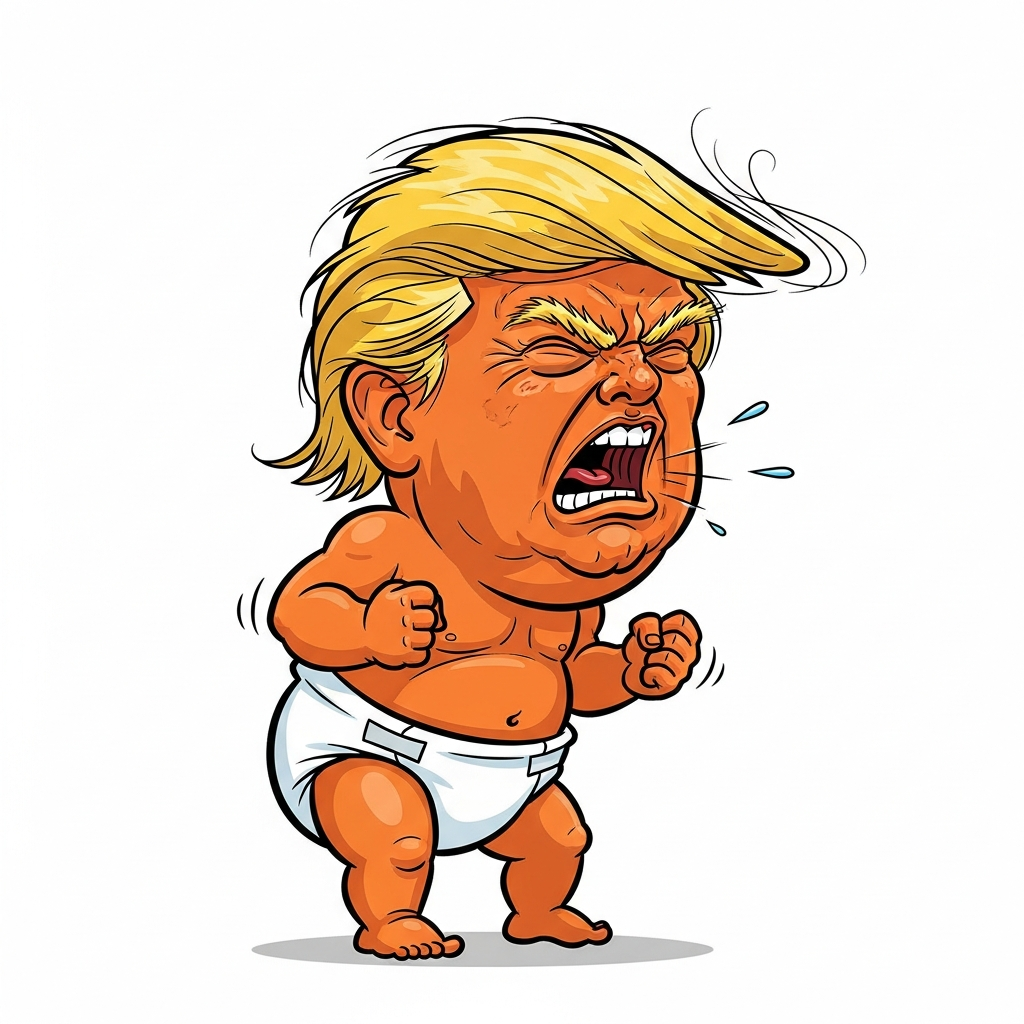
Trump Signs Executive Order Attempting to End Birthright Citizenship
Hours after his second inauguration, Trump signed Executive Order 14160 directing federal agencies to stop recognizing the U.S. citizenship of children born on American soil to undocumented parents or to parents on temporary visas — a direct attack on the 14th Amendment that was blocked by every court that reviewed it.
The Order
Among the dozens of executive orders Trump signed on January 20, 2025, Executive Order 14160 — “Protecting the Meaning and Value of American Citizenship” — was the most legally extreme. It directed federal agencies to stop issuing citizenship documents to children born on U.S. soil if their mothers were either undocumented or in the country on a temporary visa (student, work, tourist) and their fathers were not U.S. citizens or lawful permanent residents. The order was set to take effect 30 days later, on February 19, 2025.
The 14th Amendment, ratified in 1868, says it as plainly as constitutional text gets: “All persons born or naturalized in the United States, and subject to the jurisdiction thereof, are citizens of the United States.” The Supreme Court has held since United States v. Wong Kim Ark (1898) — a case about a child born in San Francisco to Chinese parents — that the clause means what it says. Trump’s order asked agencies to read the clause as if it didn’t.
The Courts Said No
Within a month, four federal district judges had issued preliminary injunctions blocking the order nationwide. At least ten lawsuits were filed by 22 state attorneys general, civil rights groups, pregnant women, and immigrant rights organizations. A federal judge in Seattle called the order “blatantly unconstitutional” from the bench. The Fourth Circuit and First Circuit upheld the injunctions on appeal.
Every court that has examined the merits of EO 14160 has ruled against it. Not one judge — Republican, Democratic, conservative, liberal — has accepted the administration’s argument that a child born in Houston to undocumented parents is somehow not “subject to the jurisdiction” of the United States. As of June 2026, the order has never actually gone into effect. Every child born in the United States today remains a U.S. citizen, full stop.
The Universal Injunctions Counterattack
Unable to defend the order on its constitutional merits, the administration changed the subject. It asked the Supreme Court not to rule on whether the order was constitutional, but on whether district courts had the authority to block it nationwide. The case reached the Supreme Court as Trump v. CASA, Inc.
On June 27, 2025, the Court ruled 6-3 — along ideological lines — that the Judiciary Act of 1789 does not generally authorize “universal” injunctions that reach beyond the named plaintiffs. The decision did not address whether ending birthright citizenship is constitutional. It did not lift the injunctions against EO 14160 in any practical way. But it gave the administration a powerful new tool against future lower-court orders limiting any of its actions, by making nationwide relief harder to obtain. The American Immigration Council described the ruling as a decision that “expanded Trump’s power” while leaving birthright citizenship itself untouched.
The administration treated the procedural win as a substantive one. It did not.
The Merits Are Coming
On December 5, 2025, the Supreme Court agreed to hear Barbara v. Trump, a class action brought in New Hampshire that squarely presents the constitutional question. Oral arguments were held in spring 2026. A decision is expected by the end of June or early July 2026 — within weeks of this entry.
The Pattern
The birthright citizenship order is the cleanest example of how Trump uses executive orders not as routine policy instruments but as battering rams against constitutional text. The administration knew the order would be enjoined. The legal theories were rejected by every textualist scholar, every prior Supreme Court ruling on point, and every lower court that has examined them. The point was never to win in court on the merits. The point was to force the question into the Supreme Court Trump shaped during his first term, attack the procedural mechanisms — universal injunctions — that have constrained him, and signal to the immigrant and mixed-status families inside the United States that their children’s citizenship is now a contested political matter rather than a constitutional given.
If the Supreme Court rules for the administration on the merits, the 14th Amendment as Americans have understood it since 1868 will be effectively rewritten by executive fiat. If it rules against, the order will join the rest of Trump’s first-day blitz — declared unconstitutional but useful for the months and years it kept the questions open.
Sources
- Trump's Birthright Citizenship Executive Order: What Happens Next — American Civil Liberties Union, May 15, 2025
- Trump v. CASA, Inc. — Slip Opinion — Supreme Court of the United States, June 27, 2025
- Supreme Court agrees to hear Trump's challenge to birthright citizenship — SCOTUSblog, December 5, 2025
- In Birthright Citizenship Decision, the Supreme Court Expanded Trump's Power — American Immigration Council, June 30, 2025