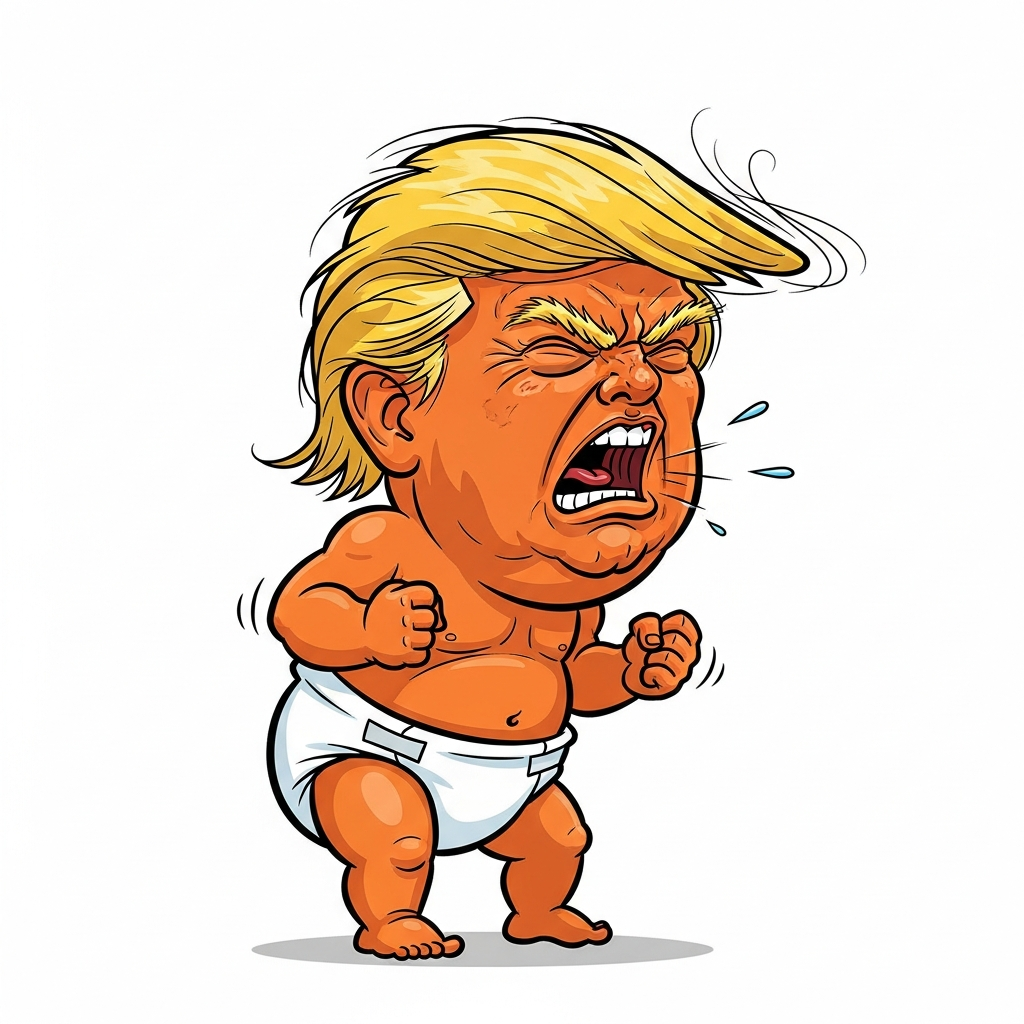
Tariff Threats Against Canada, Mexico, and China
Trump imposed or threatened sweeping tariffs on imports from Canada, Mexico, and China, roiling global markets and sparking fears of a trade war, before pausing some tariffs after last-minute negotiations with neighboring countries.
The Tariff Announcement
On February 1, 2025, President Trump announced sweeping tariffs on the United States’ three largest trading partners. He imposed a 25% tariff on imports from Canada and Mexico and a 10% tariff on Chinese goods, citing illegal immigration and the flow of fentanyl across the borders as justification. The tariffs were imposed using emergency powers under the International Emergency Economic Powers Act, a statute not previously used for broad trade actions of this scale. Global stock markets fell sharply on the news.
Pauses and Negotiations
The tariff threats immediately triggered high-stakes negotiations with Canada and Mexico. Within days, both countries announced new border security measures, and Trump agreed to pause the 25% tariffs on each country for one month while the commitments were evaluated. The whiplash sequence of threatening tariffs, imposing them, then pausing them became a pattern of the administration’s trade policy, creating uncertainty for businesses and supply chains dependent on cross-border commerce. The tariffs on China, however, went into effect, and China retaliated with its own tariffs on American goods.
Economic Impact
Economists warned that the tariffs, if sustained, would function as a tax on American consumers and businesses. Industries dependent on cross-border supply chains, including the auto industry, agriculture, and energy, faced the prospect of significantly higher costs. The auto sector was particularly exposed, as vehicles and parts cross the U.S.-Mexico and U.S.-Canada borders multiple times during production. The Canadian dollar and Mexican peso both weakened against the U.S. dollar, and businesses on both sides of the borders scrambled to assess their exposure.
Trade Policy as Leverage
The tariff episode illustrated Trump’s approach to trade policy as a tool of maximum-pressure negotiation rather than a fixed economic program. By threatening and then partially withdrawing tariffs, Trump extracted concessions from trading partners while maintaining the threat of reimposition. Critics argued the approach created damaging uncertainty and risked triggering retaliatory spirals. Supporters said Trump was using American economic power effectively to achieve policy goals beyond trade, including border security and drug enforcement, that previous administrations had failed to address through diplomacy alone.
Sources
- Trump imposes tariffs on Canada, Mexico, and China — Associated Press, February 1, 2025
- Trump Imposes Tariffs on Canada, Mexico and China — The New York Times, February 1, 2025
- Trump tariffs on Canada, Mexico and China rattle global markets — Reuters, February 1, 2025