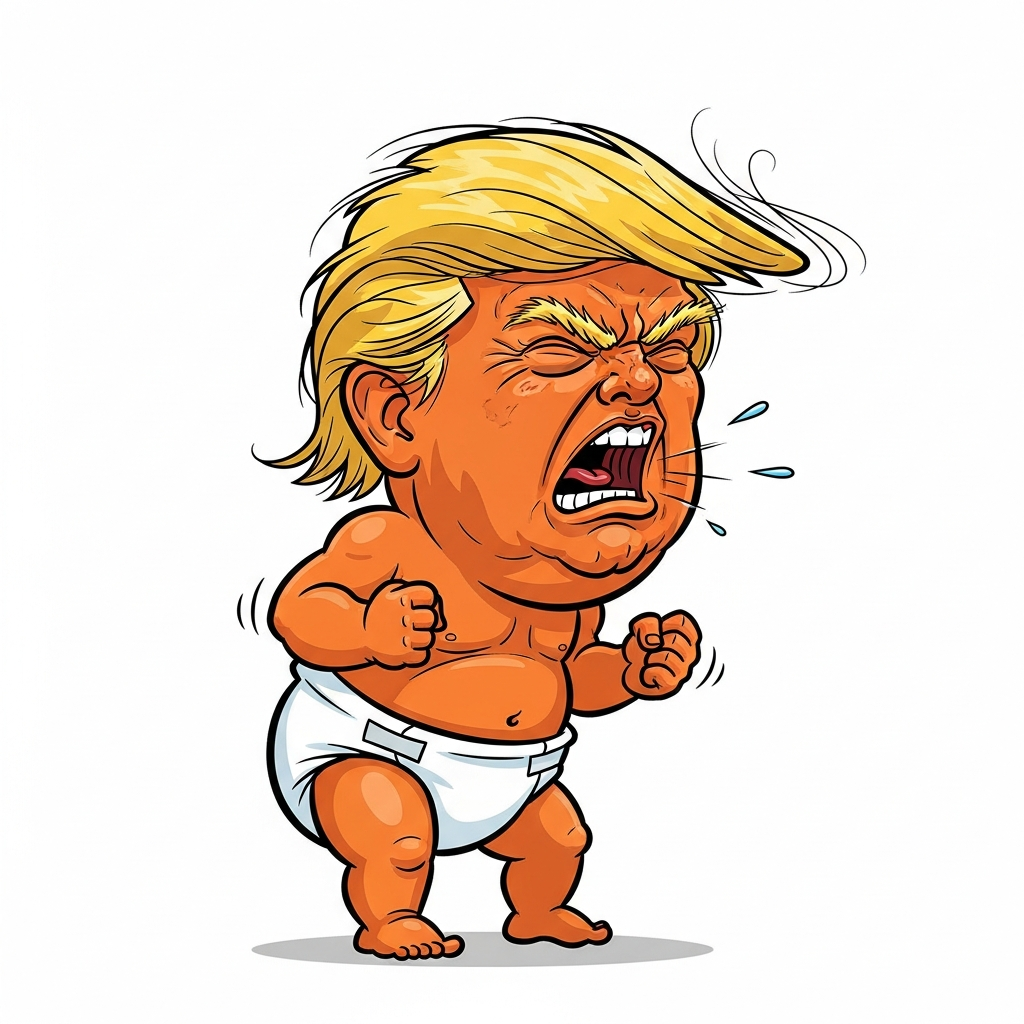
Trump Bombs Iran's Nuclear Sites Without Congressional Approval, Then Lies About the Damage
On June 22, 2025, Trump ordered Operation Midnight Hammer — the first operational use of GBU-57 bunker-busters and the largest B-2 strike in US history — to attack Iran's Fordow, Natanz, and Isfahan nuclear facilities. He did not seek congressional authorization. He notified Republican leadership before the strikes and Democratic leadership only after. He then claimed on Truth Social that Iran's nuclear program had been 'completely and totally obliterated.' His own Defense Intelligence Agency concluded within days that the strikes had set the program back only a few months.
The Strike
In the early morning hours of June 22, 2025 (Iran local time), seven B-2 Spirit stealth bombers of the 509th Bomb Wing took off from Whiteman Air Force Base in Missouri and flew east for eighteen hours, refueling three times in mid-air, under near-total radio silence. More than 125 aircraft, including decoy flights routed toward the Pacific to confuse Iranian air defenses, supported the mission. Over Iran, the B-2s dropped fourteen GBU-57A/B Massive Ordnance Penetrators — 30,000-pound bunker-busters designed specifically to destroy hardened underground enrichment sites — on the Fordow and Natanz facilities. A U.S. submarine fired Tomahawk cruise missiles at the Isfahan Nuclear Technology Center. It was the largest B-2 bomber strike in American history, and the first operational use of the GBU-57.
The mission was called Operation Midnight Hammer. It was the only direct American offensive of what came to be called the Twelve-Day War — the June 13–24, 2025 conflict that began when Israel launched its surprise strikes against Iran’s nuclear program and senior military leadership, and ended with a U.S.-brokered ceasefire two days after the American bombs landed.
Congress Was Not Asked
Article I, Section 8 of the United States Constitution vests the power to declare war in Congress. The War Powers Resolution of 1973, passed over Richard Nixon’s veto, requires the president to consult Congress “in every possible instance” before introducing armed forces into hostilities, and to notify Congress within 48 hours after doing so. Trump did neither in any meaningful sense.
The administration’s notification protocol was structured to be a fait accompli. Republican congressional leadership — Speaker Mike Johnson, Senate Majority Leader John Thune, and the chairs of the relevant defense and intelligence committees — were briefed before the strikes. Democratic leadership was told only after the planes were safely out of Iranian airspace. House Minority Leader Hakeem Jeffries could not even be reached until after the operation was complete. Defense Secretary Pete Hegseth defended the procedure by claiming the administration “complied with the notification requirements” of the War Powers Act — a reading of the statute that treats prior consultation with the opposition party as optional and post-hoc notification as sufficient.
It was not. Members of Congress from both parties said so within hours. Senator Tim Kaine, who in 2020 had forced a War Powers vote on Trump’s first-term assassination of Iranian general Qassem Soleimani, introduced a resolution to require congressional authorization for any further hostilities. Republican Senator Rand Paul and Democratic Representative Thomas Massie made similar arguments from opposite ends of the political spectrum. The resolutions failed — Republican majorities in both chambers protected the administration — but the constitutional question was now on record. A president had ordered an act of war against a sovereign nation without congressional approval, and Congress had blessed the outcome after the fact rather than asserting its prerogative.
The “Obliteration” Lie
Within hours of the strike, Trump posted on Truth Social that “Iran’s key nuclear enrichment facilities have been completely and totally obliterated.” At a televised address from the White House, he repeated the claim. Cabinet members fanned out to morning shows the following day to echo it. The political messaging was clear: the strike had not only happened, it had succeeded so totally that any further escalation was unnecessary, any congressional pushback was moot, and the Iran nuclear problem was — in the president’s words — “over.”
The Defense Intelligence Agency’s own classified initial assessment, leaked to multiple outlets within 72 hours, said the opposite. The strikes had damaged the enrichment infrastructure but had not destroyed Iran’s stockpile of enriched uranium, the centrifuge cascades themselves, or the deeply buried Fordow facility’s core. The estimated setback to Iran’s nuclear program: “a few months.” Trump’s response to the leak was to attack the intelligence community as politically motivated and to insist, contrary to his own briefers, that Fordow had been “vaporized.” The pattern — claim total success, attack the analysts who say otherwise — was identical to the one he had used after the Soleimani strike, after the first travel ban, and after the COVID response.
What It Cost
The immediate consequences of Operation Midnight Hammer were several. Iran’s Islamic Revolutionary Guard Corps retaliated within hours with missile and drone strikes on American military installations at Al-Udeid Air Base in Qatar; the base had been evacuated in advance and there were no American casualties, but the precedent — Iranian missiles striking American military soil — was established. The Strait of Hormuz, through which roughly 20% of the world’s seaborne oil passes, was briefly threatened with closure. Oil prices spiked. Insurance rates for Gulf shipping rose to wartime levels.
The longer-term consequences are still being absorbed. The strikes did not end Iran’s nuclear program; they pushed it underground, both literally and diplomatically, with Tehran withdrawing from inspection cooperation with the International Atomic Energy Agency. The June 24 ceasefire that ended the Twelve-Day War held for eight months; in February 2026, hostilities resumed when Iran was accused of breaching the agreement, and the United States launched Operation Epic Fury — a much larger and longer campaign that has continued, in fits and starts, into the summer of 2026.
The Pattern
Trump’s case for Operation Midnight Hammer rested on three claims: that Iran was on the brink of a nuclear weapon, that the strikes destroyed the program, and that no congressional authorization was required because the action was limited and defensive. The first claim was disputed by the intelligence community before the strikes and remains disputed afterward. The second was contradicted by his own DIA within days. The third was the constitutional argument American presidents have been making for a generation — but Trump pushed it further than any of his predecessors, treating the notification of one party as sufficient and the consultation of the other as discretionary.
What was demonstrated on June 22, 2025, was not that the United States had the military capability to strike Iran’s nuclear sites. Everyone already knew that. What was demonstrated was that the President of the United States could now order a major act of war against a foreign country without asking Congress, lie about the result, and face no domestic legal or political consequence. The B-2s came home. The constitutional architecture they flew over did not.
Sources
- U.S. strikes 3 nuclear sites in Iran, in major regional conflict escalation — NPR, June 21, 2025
- Trump ordered attack on Iran's nuclear sites without congressional approval — NPR, June 22, 2025
- How Trump quietly made the historic decision to launch strikes in Iran — CNN, June 22, 2025
- Fact-checking statements made by Trump to justify U.S. strikes on Iran — PBS NewsHour, June 22, 2025
- Trump says early report on damage to Iran's nuclear program was inconclusive — NPR, June 24, 2025
- Did Trump violate War Powers Act by bombing Iran nuclear sites? — PolitiFact, June 22, 2025