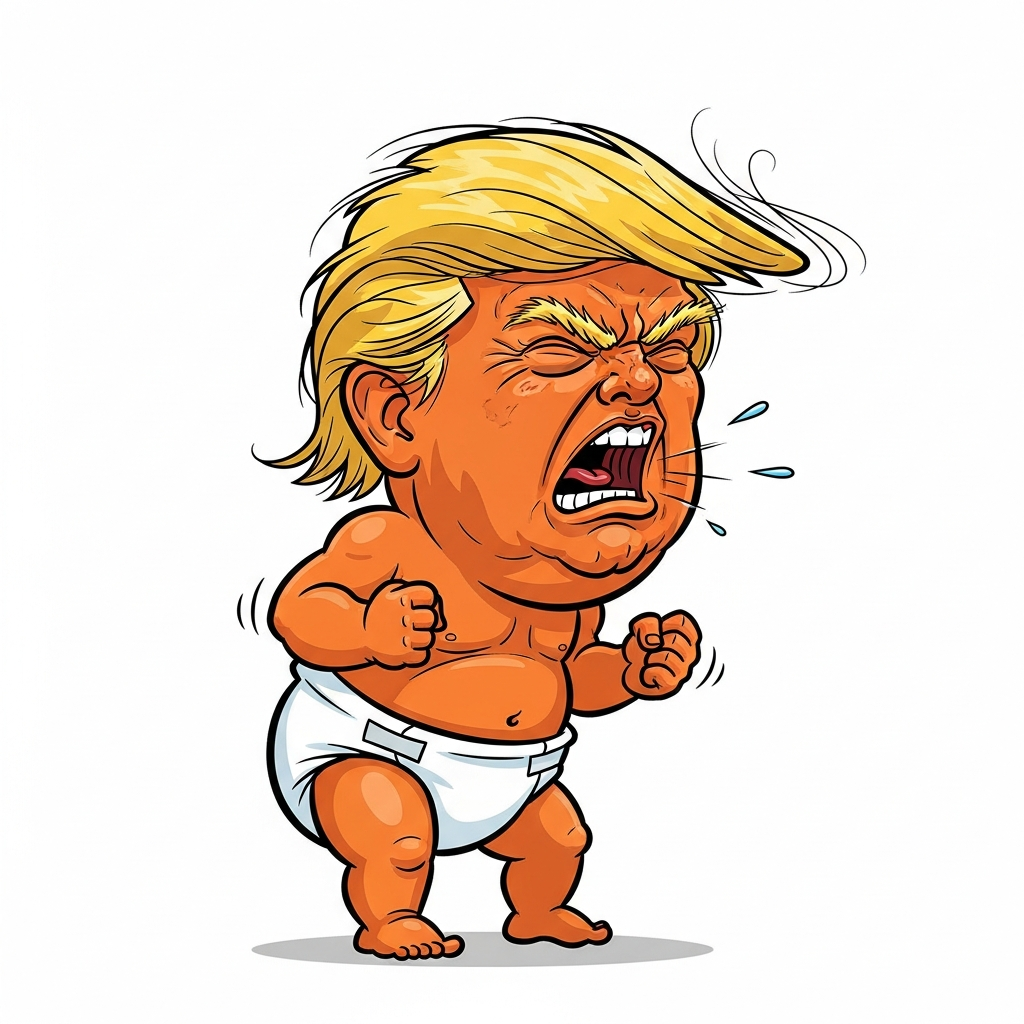
Trump's DOJ Moves to Erase His $83.3M Carroll Judgment Using Federal Resources
The Justice Department deployed the Westfall Act to ask the Supreme Court to substitute the federal government for Trump as defendant in E. Jean Carroll's defamation case — a maneuver that would make the $83.3 million judgment disappear, since the U.S. government cannot be sued for defamation.
The Maneuver
In May 2026, the Justice Department asked the Supreme Court to let the federal government substitute itself for Donald Trump as the defendant in E. Jean Carroll’s $83.3 million defamation case. The legal mechanism is the Westfall Act, a law designed to shield individual federal employees from personal liability when they act within the scope of their duties. The DOJ’s theory: Trump was acting as a government employee when he repeatedly lied on camera and on social media to deny Carroll’s credible account of rape in a Bergdorf Goodman dressing room in the mid-1990s. Under that theory, his defamatory statements were official presidential conduct.
The practical consequence is not complicated. The United States government cannot be sued for defamation. If the Supreme Court accepts the substitution, Carroll’s case transforms from Carroll v. Trump to Carroll v. United States — and is immediately subject to dismissal. The jury verdict evaporates. The $83.3 million disappears. Trump escapes. American taxpayers, in effect, absorb a civil sexual abuse and defamation judgment that a federal jury took two trials and weeks of testimony to deliver.
What the Courts Already Said
This was not a close call at the appellate level. The 2nd U.S. Circuit Court of Appeals — the federal court that covers New York, where the case was tried — rejected the Westfall Act argument in April 2026, ruling bluntly that Trump and the government had “waived any right” to seek substitution by waiting fifteen months after trial and the entry of judgment. The court added: “The fact of the matter is that no other defendant would be permitted to move to substitute the United States in his place, 15 months after trial and the entry of judgment.” That language was pointed. It was a rejection not just of the legal argument but of the premise that ordinary procedural rules apply to this president.
The DOJ disagrees and is asking the Supreme Court to overrule its circuit. It is a long shot on the merits — the Westfall Act has never been interpreted to cover a president’s public denials of a pre-presidential rape allegation — but with a 6-3 conservative supermajority and a Court that has already dramatically expanded presidential immunity, a long shot is not a no shot.
”Acting Within the Scope of Employment”
The central absurdity of the DOJ’s position is the claim that Trump was performing official presidential duties when he called Carroll “a lying woman” and a “con job” and suggested she was “not my type” and wasn’t attractive enough to be assaulted. These statements were made in interviews, on social media, and at political rallies — a campaign of personal attack by a man defending his sexual history, not a president conducting foreign policy or executing a law.
No previous administration of either party has argued that a president’s personal denials of pre-office sexual misconduct constitute official acts of government. The theory requires treating anything a sitting president says in any venue as a government act — which would, among other things, insulate every presidential lie, every personal vendetta, and every threat from legal accountability. That is not a legal argument. It is a framework for immunity so total that “president” becomes a title that dissolves law.
The Pattern: DOJ as Personal Law Firm
The use of the Justice Department to defend Trump’s personal legal exposure is a through-line of his second term. He installed his personal criminal defense attorney, Todd Blanche, as acting attorney general. He used the DOJ to dismiss his own federal criminal cases — charges that had nothing to do with official conduct and everything to do with his personal crimes before and after his first term. He directed DOJ resources toward prosecuting his perceived enemies while shielding himself and his allies from accountability.
The Carroll intervention is the clearest illustration yet of how completely that transformation is complete. The woman who was sexually assaulted, publicly humiliated, and then defamed over years is now being asked, in effect, to sue the government she pays taxes to for the conduct of the man who assaulted her. The Justice Department — funded by Carroll and every other American taxpayer — is spending public resources to make her case go away.
When Carroll first won her verdict in 2024, she said she planned to donate the money to charity. Trump’s lawyers have cited that intention as a reason to pause enforcement: if she’s giving it away anyway, why rush? The same lawyers are simultaneously asking courts to ensure she never collects. That is the moral architecture of this president’s relationship to accountability: every avenue toward consequence is an obstacle to be litigated into exhaustion.
Sources
- DOJ wants federal government, not Trump, on the hook for $83.3M verdict in E. Jean Carroll case — The Washington Times, May 6, 2026
- US Seeks Supreme Court Approval to Intervene in Trump-Carroll Defamation Appeal — Bloomberg, May 6, 2026
- Trump Enlists DOJ as His Personal Attorneys to Fight E. Jean Carroll — The New Republic, May 6, 2026
- Trump asks appeals court to pause ruling in E. Jean Carroll case pending a Supreme Court decision — NBC News, May 5, 2026