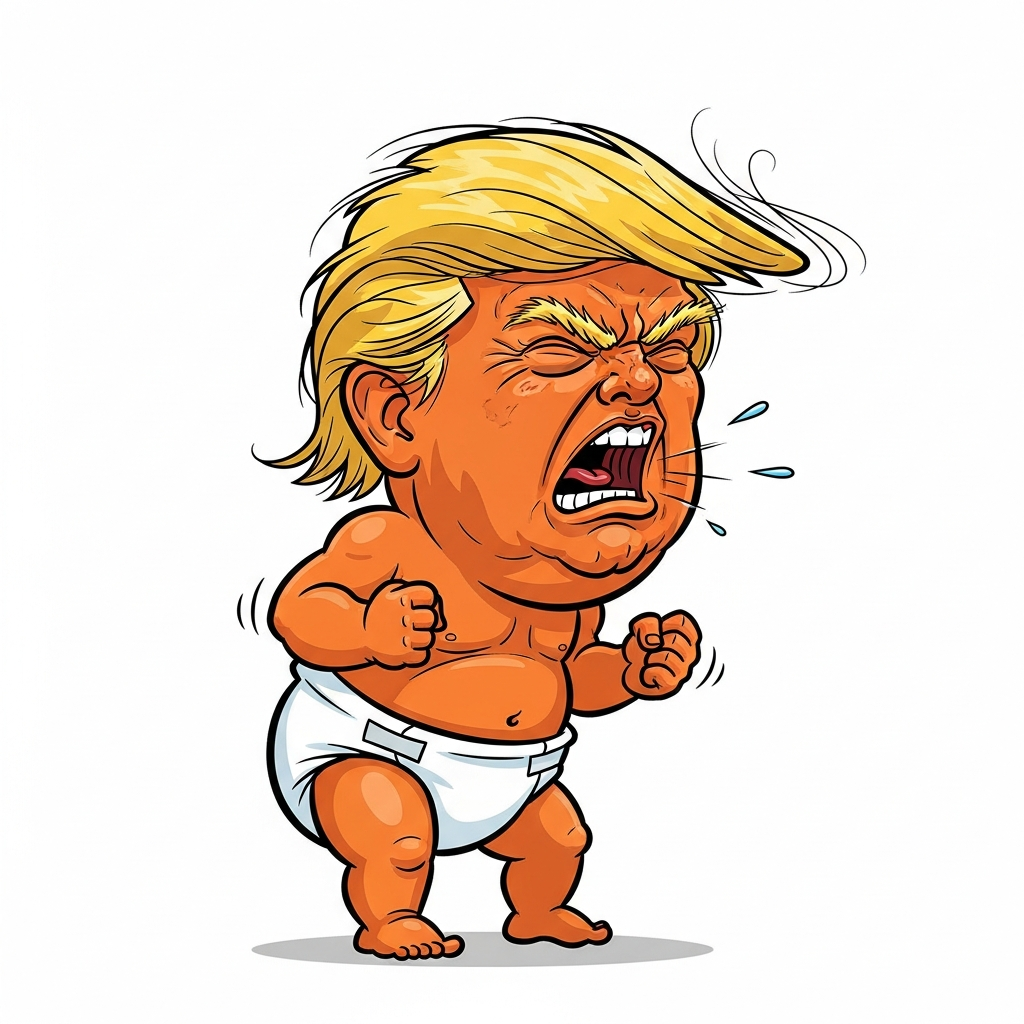
Trump Calls Iran Strikes a 'Love Tap' as US and Iranian Forces Trade Fire in Strait of Hormuz
Three U.S. Navy destroyers came under sustained Iranian missile, drone and small-boat attack while transiting the Strait of Hormuz. The U.S. retaliated with strikes on Iranian military sites, then Trump publicly dismissed the exchange as 'just a love tap' while threatening to hit Iran 'a lot harder, and a lot more violently' if it does not sign a deal.
A “Love Tap” From Three Warships
The USS Truxtun, USS Rafael Peralta, and USS Mason were transiting the Strait of Hormuz on Thursday when Iranian forces opened fire on them with missiles, drones, and small attack boats. U.S. Central Command said its sailors intercepted “unprovoked Iranian attacks” and responded with self-defense strikes on Iranian military facilities — including missile and drone launch sites, command-and-control nodes, and surveillance positions — around the southern Iranian ports of Qeshm and Bandar Abbas.
By the standards of any normal commander-in-chief, this would be the most serious U.S.–Iran combat exchange in months: three American warships under coordinated attack in one of the world’s most strategically vital chokepoints, followed by retaliatory strikes on sovereign Iranian territory. By the standards of Donald Trump, it was a marketing problem.
Hours after the attacks, Trump told an ABC News reporter that the strikes were “just a love tap.” Then, on Truth Social, he warned that “just like we knocked them out again today, we’ll knock them out a lot harder, and a lot more violently, in the future, if they don’t get their Deal signed, FAST!” The April 8 ceasefire he had unilaterally extended, he insisted, was still in place.
A Ceasefire That Isn’t One
The “ceasefire” Trump keeps invoking is, by now, a rhetorical device more than a description of reality. The Iran war he launched on February 28 with massive U.S.–Israeli strikes (“Operation Epic Fury”) was paused on April 8 in a two-week truce that Trump then extended on his own authority. In the weeks since, Iran has seized an oil tanker in the Gulf of Oman, U.S. forces have sunk Iranian small boats, U.S. warships have come under repeated fire, and the United States has now bombed Iranian territory at least twice while Trump publicly declares that nothing of consequence is happening.
The pattern is familiar. Trump declares peace, escalates, declares the escalation an act of peace, and threatens far worse if the other side does not capitulate to a deal whose terms shift week to week. His own Treasury Secretary, Scott Bessent, has been telling the public the U.S. is “expecting a response from Tehran.” His State Department has been running negotiations through Pakistani intermediaries. And the President himself appears to regard the war as something between a leverage tactic and entertainment, narrating a “love tap” while three of his Navy’s destroyers were maneuvering through enemy fire.
The Strategic Stakes He Refuses to Name
The Strait of Hormuz is the transit point for roughly a fifth of the world’s seaborne oil. A genuine shooting war there — not the dressed-up version Trump describes — would spike global energy prices, draw in Gulf allies, and put U.S. forces in the kind of sustained combat the President has spent years promising to avoid. Iran’s escalating attacks on U.S. ships in the strait are not the actions of a regime that believes Trump’s threats are bluffs. They are the actions of a regime that has read his behavior carefully and concluded that calibrated provocation is survivable, because the American president cares more about the optics of “winning” a deal than about coherent military pressure.
That is the cost of a foreign policy run on Truth Social. The “love tap” framing exists to manage Trump’s domestic image, not to deter Iran. It tells the public there is no real danger, while telling Tehran — accurately — that the President will accept escalating attacks on U.S. warships rather than admit his own ceasefire has collapsed.
The Pattern
This is what authoritarian impulse looks like in foreign policy: war as personal narrative, oversight discarded, allies sidelined, and reality bent to fit whatever statement the President posted that morning. Congress has not authorized any of this. The American public has been told a war is over while it is plainly not. And U.S. sailors are now sailing through one of the most contested waterways on earth as set dressing for a “deal” the President insists is just one tantrum away.
If a different president had dismissed an Iranian missile-and-drone barrage on three U.S. destroyers as a “love tap,” the political class would treat it as a generational scandal. From Trump, it is Thursday.
Sources
- Day 69 of Middle East conflict — Trump warns Iran to sign a deal 'fast' — CNN, May 7, 2026
- Qeshm, Bandar Abbas: US military strikes sites in Iran as countries exchange fire — CNN, May 7, 2026
- U.S. and Iran trade fire in Strait of Hormuz; each claims other shot first — CNBC, May 7, 2026
- U.S. and Iran exchange fire near the Strait of Hormuz; Trump says ceasefire still holds — NBC News, May 7, 2026
- US strikes military targets in Iran after attacks on destroyers in Strait of Hormuz: Centcom — The Hill, May 7, 2026
- 2 U.S. Navy destroyers transit Strait of Hormuz after dodging Iranian onslaught — CBS News, May 7, 2026