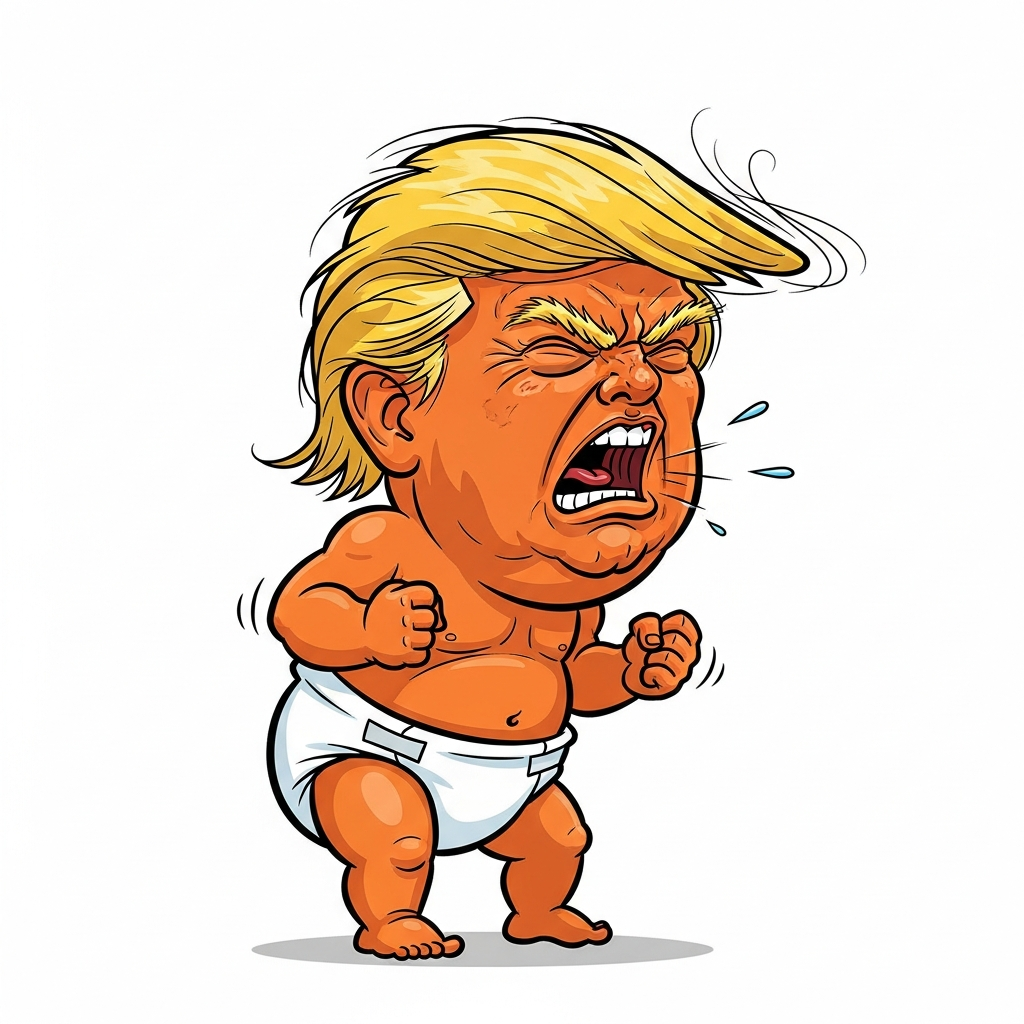
Court of International Trade Strikes Down Trump's 10% Global Tariff as Unlawful
A three-judge panel of the U.S. Court of International Trade ruled 2-1 on May 8 that Trump's 10 percent across-the-board global tariff, imposed in February under Section 122 of the Trade Act of 1974, was unlawful. The ruling — won by a small spice retailer, a toy company, and the state of Washington — is the latest in a string of federal court losses for Trump's signature tariff agenda, and it forces the administration to scramble for new statutory authority to keep the duties in place.
A Spice Importer, a Toy Maker, and a State Took Trump to Court — and Won
On Thursday, May 8, 2026, a three-judge panel of the U.S. Court of International Trade ruled 2-1 that the 10 percent across-the-board tariff Trump imposed by executive order in February was unlawful. The plaintiffs were not multinational conglomerates: they were Burlap & Barrel, a New York–based online spice retailer; Basic Fun, a Florida toy company; and the state of Washington, which sued on behalf of its consumers and import-dependent industries. They argued that the statute Trump invoked — Section 122 of the Trade Act of 1974 — does not authorize what the president did with it. The court agreed.
Section 122 lets the president impose temporary tariffs of up to 15 percent for up to 150 days, but only if the United States is facing “large and serious” balance-of-payments deficits — a specific economic emergency, not the general trade-deficit grievance that has been Trump’s standing political talking point since the 1980s. Trump’s executive order cited the trade deficit. The court ruled that the trade deficit and a balance-of-payments crisis are not the same thing, and that Trump’s reading would let any president impose tariffs on any country at any time for any reason. As trade attorney Timothy Brightbill put it, the decision was “a decisive rejection of the president’s use of Section 122 tariffs.”
The Latest in a Pattern of Court Losses
This is not Trump’s first tariff loss in federal court, and it will not be his last. Across 2025 and 2026 a succession of three-judge panels at the Court of International Trade — a federal court whose entire purpose is reviewing trade-statute disputes — has repeatedly ruled that the administration is exceeding its statutory authority. Earlier rulings struck down Trump’s use of the International Emergency Economic Powers Act to impose tariffs on Canada, Mexico, and China. The administration has appealed each ruling and lost on the merits at the appellate level multiple times.
What ties the rulings together is the same legal flaw: Trump treats tariff statutes as if they delegate to him a personal power to tax any imports for any reason, when the statutes Congress actually wrote are narrowly tailored to specific economic conditions. The Constitution grants the power to lay duties to Congress, not to the president, and the statutes in question are limited delegations of that power. Trump’s executive orders read as if those limits are not there.
The Administration’s Response: Appeal, and Find a New Statute
U.S. Trade Representative Jamieson Greer announced the appeal within hours of the ruling and predicted the administration would prevail at the Court of Appeals for the Federal Circuit. Greer also signaled what the White House plans to do regardless of how the appeal goes: re-impose the same tariffs under different statutory authority, including Section 301 (used historically against specific unfair trading practices) and Section 232 (national-security tariffs).
That is not a legal strategy so much as an admission. The administration is publicly conceding that it does not particularly care which law it cites for the tariffs as long as the tariffs stay in place. It will move from statute to statute until it finds one a court does not strike down — or, failing that, until it runs out the clock and the political cost of import inflation falls on the next administration to undo.
Who Pays for This
Tariffs are paid by U.S. importers and passed through to U.S. consumers. The 10 percent global tariff hit small businesses hardest — companies like Burlap & Barrel, which has built a business around farmer-direct spice imports from dozens of countries, faced sudden 10 percent cost increases on every shipment. Basic Fun, the toy company, faced the same pressure on Chinese-manufactured toys at the worst possible time of year for retailers planning holiday inventory. Washington state, an export-oriented economy whose ports and farmers depend on uninterrupted trade, has watched retaliatory tariffs from trading partners hammer its apple, wheat, and aerospace industries.
The companies that brought the case are exactly the kind of small and medium-sized U.S. importers whose existence Trump’s tariff theory ignores. The president has spent years pretending that tariffs are a tax on foreign countries; they are, demonstrably and as a matter of how customs enforcement actually works, a tax on Americans. The ruling does not undo the months of higher prices that already happened. It does, narrowly, free these particular plaintiffs from continuing to pay them.
What Comes Next
The Section 122 tariffs were already scheduled to expire by statute in late July, so the immediate practical effect of the ruling is limited. The larger effect is doctrinal. Each time a federal court rejects the administration’s expansive reading of tariff statutes, it makes the next executive order more legally exposed — and gives the next round of plaintiffs a roadmap. The Trump administration has now lost on Section 122 and on IEEPA. Sections 301 and 232 are next. So is the basic constitutional question of whether the president can rewrite the tariff schedule by decree at all.
The lawsuit also illustrates the one piece of structural good news in a genuinely bleak legal environment for the rule of law: the federal courts, including judges Trump himself appointed, are still — for now — willing to read the actual text of the statutes Congress wrote and rule against the president when he ignores them. Whether that holds as Trump’s pressure campaign on the federal judiciary intensifies is a separate question. On May 8, in this case, on this statute, it held.
Sources
- Trump Administration Appeals Latest Court Loss on Tariffs — U.S. News & World Report, May 8, 2026
- Trade court rules against Trump's global tariff — Missouri Lawyers Media, May 8, 2026
- Trump administration will win appeal of ruling against temporary tariffs, US trade chief says — WTVB News, May 8, 2026