Hours After Senate Rebuke on War Powers, Trump Demands $87.6 Billion More for the Iran War
The White House sent Congress a supplemental spending request of $87.6 billion, the bulk of it for the Iran war Trump launched in February, just hours after he had screamed at Republican senators in a closed-door lunch over their votes on a war powers resolution. The package bundles Pentagon money for an unpopular conflict with farm bailouts and Ebola aid, daring members to vote against any of it.
The Numbers
The supplemental package the White House sent Congress on the afternoon of June 24 totals $87.6 billion. The Pentagon would receive $67 billion of that — $21 billion for munitions, $17.3 billion for “operational costs,” and $12.1 billion routed into classified programs whose details Congress will not see. Another $11.1 billion would go to American farmers, who have been crushed by retaliatory Chinese and Iranian tariffs since the war began. And $1.4 billion is earmarked for responding to an Ebola outbreak in Central Africa that the administration’s own budget hawks had previously refused to fund.
The bundle is not an accident. By packaging deeply unpopular war money with farm bailouts and a public-health emergency, the White House is forcing every member of Congress who votes against it to also vote against payments to farmers in their districts and against responding to a viral outbreak. This is the same supplemental architecture Trump used in his first term and that George W. Bush used during the Iraq War. The political theory is straightforward: do not make Congress vote on whether to keep funding the war; make them vote on a bill that has farm aid in it.
What the Senate Did First
The request landed hours after a Senate vote that should have stopped this conversation. Earlier on June 24, the Senate took up a war powers resolution that would have required the President to withdraw U.S. armed forces from hostilities with Iran absent congressional authorization. The resolution failed by 47 to 50. Three Republicans broke with the President and voted for it. The vote was a public, on-the-record statement that nearly half the Senate believes the President is fighting a war he is not authorized by Congress to fight.
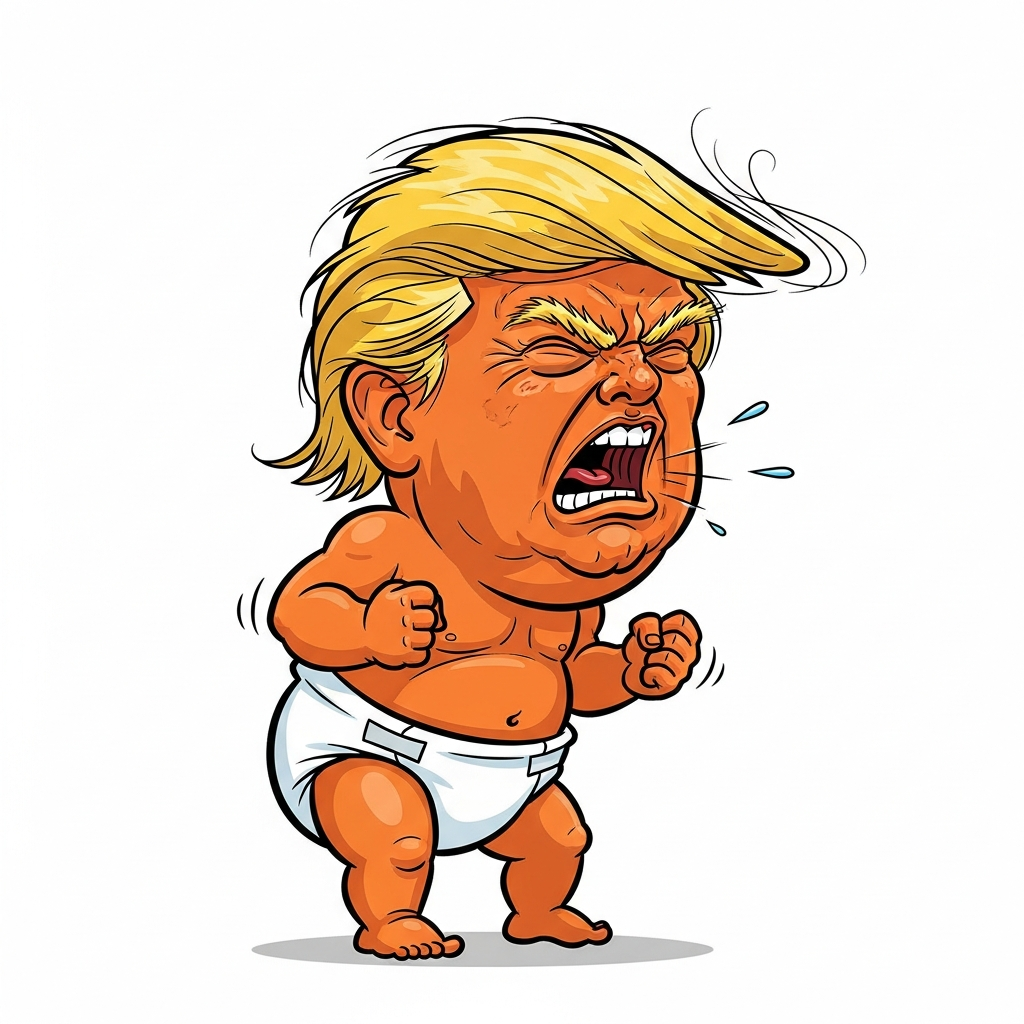
Trump’s response was to drive directly to the Capitol, sit down at the Senate Republican policy lunch, and — according to multiple senators present — engage in a shouting match with one of the Republicans who had voted for the resolution. Less than three hours later, the Office of Management and Budget transmitted the supplemental request. The message was not subtle: rebuke me on war powers in the morning, fund the war in the afternoon.
A War the President Cannot Lawfully Wage
Trump launched “Operation Epic Fury” against Iran in February 2026 without an authorization for the use of military force from Congress. The administration’s legal justification has rested on a stretched reading of the President’s Article II authority as commander in chief and a series of public claims that Iran’s nuclear program constituted an imminent threat — claims that the Director of National Intelligence’s own assessments, leaked through congressional hearings, did not support. Four months in, U.S. forces are conducting strikes from carrier groups in the Gulf, ground operations are reportedly underway near Iran’s western border, and the Pentagon is requesting classified funds that Congress will not be permitted to scrutinize.
The War Powers Resolution of 1973 was passed for exactly this scenario. It requires the President to obtain congressional authorization within sixty days of introducing U.S. forces into hostilities. That window closed months ago. The administration has neither sought authorization nor stopped the operation. By coming to Congress for money rather than authority, the White House is treating the war as a fact of nature that the legislative branch can fund or refuse to fund but no longer prevent.
The Farmers Are Hostages Too
The $11.1 billion in farm aid is the most cynical line in the supplemental. American farmers are losing markets because of the war — Chinese soybean buyers have walked away in retaliation for U.S. moves in the Strait of Hormuz, and Iran’s network of regional buyers has been cut entirely. The administration’s solution is not to end the policy causing the losses but to write checks. It is the same playbook from the first-term China trade war: trigger the damage, then bail out the victims with Treasury money, then claim credit. Farmers are being conscripted into political cover for a war they did not vote for.
The Pattern
Each piece of this story is recognizable on its own. The first-term Iraq supplementals. The first-term trade-war farm bailouts. The first-term contempt for War Powers Act constraints. What is new is the speed and the openness. The Senate publicly rebuked the President at 1 p.m.; the White House publicly demanded $67 billion in war money by 4 p.m. There is no longer any pretense that the supplemental process is a dialogue between coequal branches. It is a presentation of a fait accompli, dressed up with farm aid and Ebola dollars so that voting against it carries a political cost the administration intends Republicans to feel.
A Senate that wanted to assert its constitutional role over war and the purse has a textbook moment for it. The administration is openly testing whether that Senate exists.
Sources
- White House requests $87.6 billion supplemental spending for Iran war, farm aid — CNBC, June 24, 2026
- Trump administration asks Congress for $88 billion in supplemental funding for Iran war, Ebola, farm aid — CBS News, June 24, 2026
- White House seeks $87.6B from Congress for Iran war costs, U.S. farmers and Ebola response — PBS NewsHour, June 24, 2026
- Trump Administration Asks Congress for $87.6 Billion, Mostly for Iran War — U.S. News, June 24, 2026
- Trump administration asks Congress for $87.6 billion in supplemental spending, with majority for Iran war — Stars and Stripes, June 24, 2026
- Trump White House requests $87.6bn in spending, including for Iran war — Al Jazeera, June 24, 2026