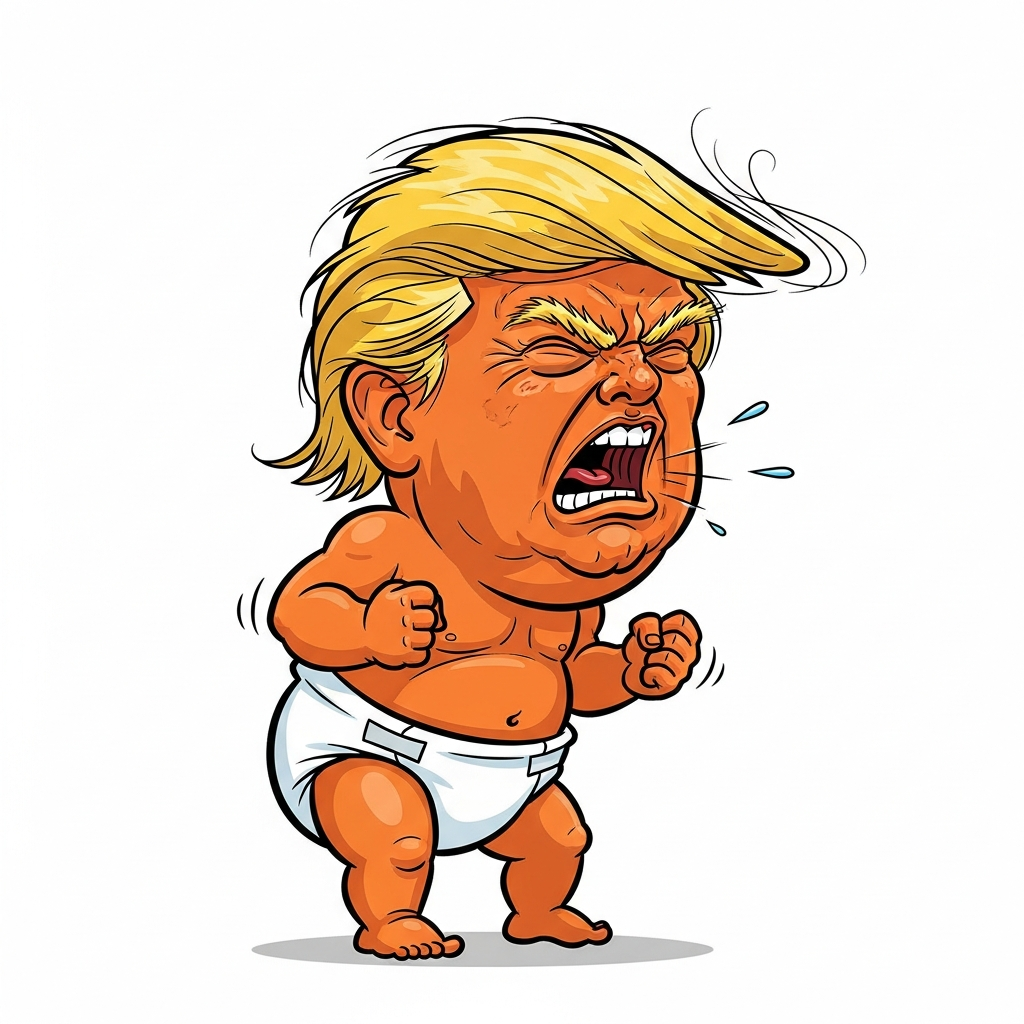
Trump Takes a Bipartisan Housing Bill Hostage to Force a Voter-Suppression Bill Through Congress
Trump abruptly cancelled the Capitol Hill signing of the largest housing affordability bill in decades, telling Congress he would not sign it until lawmakers pass the SAVE America Act, his stalled bill to add proof-of-citizenship requirements to voter registration nationwide. The move ties relief for millions facing a housing crisis to passage of an unrelated measure designed to throw eligible voters off the rolls.
A Bill the President Asked For, Then Refused
The 21st Century Road to Housing Act cleared the Senate and the House by wide bipartisan margins. It restricts large institutional investors from buying up single-family homes, loosens federal building rules to push more housing supply into a market that is short by an estimated three million units, and expands rental assistance for low-income tenants. The bill was negotiated for over a year. The White House supported it publicly. A signing ceremony was on the President’s Capitol Hill schedule for the afternoon of June 24.
That morning, Trump cancelled the ceremony. In a Truth Social post, he announced: “Today’s Housing News Conference and Signing is hereby cancelled until such time as we pass the desperately needed SAVE AMERICA ACT, which I consider to be a National Emergency.” Asked about it in the Oval Office a few hours later, Trump told reporters: “I said I’m not signing the housing bill.”
The substance of the housing bill had not changed overnight. What changed was the President’s view of how to use it.
The SAVE America Act, in Plain English
The SAVE America Act is a Republican proposal that would require every American to present documentary proof of U.S. citizenship — a passport, a birth certificate, or a narrow set of other documents — before registering or re-registering to vote in any federal election. Roughly 21 million American adults do not have ready access to such documents, according to research from the Brennan Center; that includes married women whose current legal name does not match their birth certificate, low-income citizens who never obtained a passport, and the elderly. Voting by noncitizens, the problem the bill purports to address, is already illegal under federal law and statistically negligible — the Heritage Foundation’s own database, after twenty years of searching, has documented only a few dozen cases nationwide out of hundreds of millions of votes cast.
The bill has stalled in the Senate because Republicans do not have the 60 votes to break a filibuster. Democrats unanimously oppose it. Trump is now demanding that Congress kill or carve around the filibuster to get it through, and using the housing bill as the lever.
Hostage-Taking as Governance
What makes this episode notable is not the policy disagreement. It is the explicit transactional framing. The President has signed dozens of bills that he disliked because his predecessors built a constitutional norm in which the executive does not condition signature on the passage of unrelated legislation. That norm exists for a reason. A signature is a duty under Article I when a bill passes both chambers; the constitutional remedy for disagreement is the veto, which Congress can override. What Trump has staged instead is a public extortion: pass my voter-suppression bill or millions of Americans don’t get the housing relief Congress just gave them.
It also will not work as a permanent block. Under Article I, Section 7, a bill becomes law if the President neither signs nor vetoes it within ten days, excluding Sundays, while Congress is in session. House and Senate leaders pointed this out within hours. The housing bill will almost certainly take effect by early July whether Trump signs it or not.
But that, too, is part of the design. The President gets a week of public theater in which he is demanding action on “election integrity.” Republican senators get pressured to back the SAVE Act under threat of being blamed for blocking it. The cancelled ceremony gives the base footage of Trump fighting Democrats and his own party simultaneously. The housing bill becomes law without his name on it, and he denies its sponsors a political win.
The Voter-Suppression Pipeline
Read alongside the Postmaster General’s testimony the same week — that USPS will refuse to deliver mail ballots in states that won’t hand over their voter lists — and alongside the federal court order this week blocking the administration from using a revamped immigration database to scrub voter rolls, the SAVE Act push is one piece of a coordinated project. The President is asking Congress to provide statutory authority for the same restrictions that his executive orders are trying to impose unilaterally and that the courts are striking down. If Congress refuses, the executive branch keeps moving by other means.
The Cost of the Spectacle
The bill Trump is sitting on was supposed to address what polling consistently identifies as the single biggest economic concern of voters in both parties: the cost of putting a roof over their head. The President’s reaction to the bill passing was to use it as a chip in a fight over voting rights. That is the trade he is offering: housing relief in exchange for a federal voter-purge regime. The fact that the housing bill will probably become law anyway is what allows him to stage the trade without paying the political cost of actually killing it. The voters who lose the ability to register, on the other hand, will not get those rights back automatically in ten days.
Sources
- Congress passes the largest housing affordability bill in decades — and Trump cancels the signing — NPR, June 23, 2026
- Trump leaves major housing bill in limbo, demanding Congress pass the SAVE Act — NBC News, June 24, 2026
- Trump cancels signing of bipartisan housing bill until his SAVE America Act is passed — ABC News, June 23, 2026
- Trump cancels signing of largest housing affordability bill in a generation — CNN, June 23, 2026
- Trump administration news, DC rally kicks off America 250 celebration — CNN, June 24, 2026