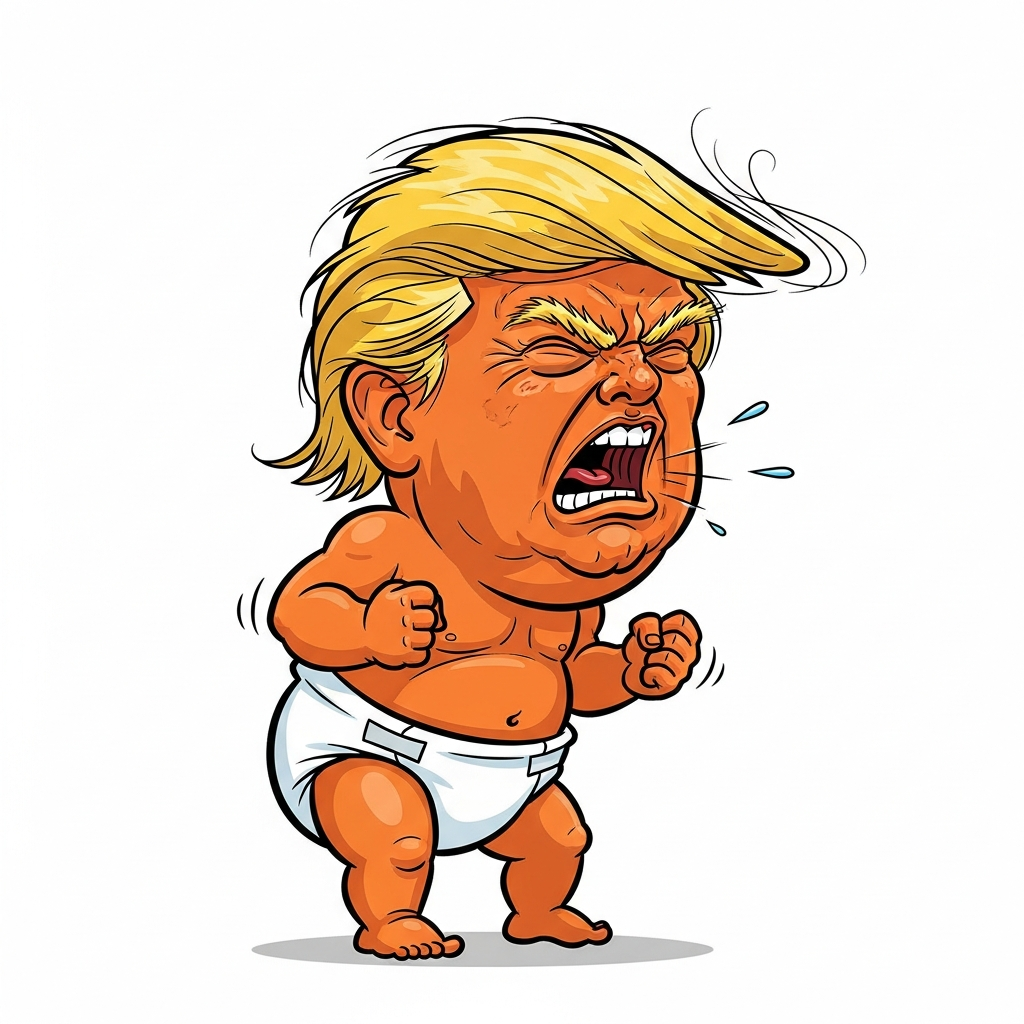
Supreme Court Clears Trump to Strip Deportation Protections from 350,000 Haitians and 6,000 Syrians
In a 6-3 decision in Mullin v. Doe, the Supreme Court let the Trump administration terminate Temporary Protected Status for roughly 350,000 Haitians and 6,000 Syrians, holding that federal courts cannot meaningfully review the Homeland Security secretary's decision. Justice Kagan dissented that Trump's own statements about Haiti 'fairly shout, in their racial undertones and overtones,' that race drove the policy.
The Ruling
On June 25, 2026, the Supreme Court split 6-3 along ideological lines and gave the Trump administration the green light to revoke Temporary Protected Status for roughly 350,000 Haitians and 6,000 Syrians living legally in the United States. The decision in Mullin v. Doe paused lower court rulings out of Washington, D.C., and New York that had blocked the terminations and let then-Secretary of Homeland Security Kristi Noem’s revocations take effect.
Justice Samuel Alito, writing for the majority, held that the federal statute creating the TPS program “expressly restricts” courts from second-guessing the secretary’s decision to terminate or extend protections. In other words: the Department of Homeland Security can strip a country of its TPS designation, and the federal judiciary is now formally barred from reviewing whether that decision was rational, evidence-based, or — as the plaintiffs argued and the dissent agreed — visibly motivated by racial animus.
In a companion ruling the same day, the Court also cleared the way for the administration to revive a separate policy designed to drastically curtail the number of migrants Border Patrol officials must screen for asylum eligibility at the southern border. Between the two cases, the Court handed Trump the legal authority to remove more than one million people from the country and to block many more from entering.
What TPS Is, and What Ending It Means
Temporary Protected Status was created by Congress in 1990 to give people from countries devastated by war, natural disaster, or extraordinary humanitarian crisis the legal right to live and work in the United States until conditions back home stabilized. Haiti has held TPS since the 2010 earthquake; the designation has been re-upped repeatedly through hurricanes, cholera outbreaks, gang takeovers of Port-au-Prince, and an active civil collapse that the State Department itself currently describes as too dangerous for American officials to enter. Syria has held it since 2012, throughout the civil war.
What the termination means in practice: the affected Haitians and Syrians lose their legal right to work. Their employers are required to fire them. Their driver’s licenses lapse. Their U.S.-born children — many of them now teenagers — remain American citizens, but their parents do not. They become deportable. Many will be removed to countries the U.S. government itself classifies as too dangerous for its own diplomats. Many will not. Many will go underground in the United States, joining the population of undocumented workers that Trump has spent a decade demanding the country expel.
The administration is not pretending otherwise. This is the policy. It is being executed.
The Dissent’s Verdict
Justice Elena Kagan, joined by Justices Sotomayor and Jackson, wrote a dissent that the majority’s opinion will spend decades trying to outrun. Trump’s public record on Haiti, Kagan wrote, was not subtle. The statements quoted in the dissent are Trump’s own: his description of Haiti as a “filthy, dirty, disgusting s***hole country”; his characterization of Haitian migrants as people who “all have AIDS”; his 2024 campaign-trail repetition of the fabricated claim that Haitians in Springfield, Ohio, were eating people’s pets. Those statements, Kagan wrote, “fairly shout, in their racial undertones and overtones alike, that race entered into the president’s resolve to remove Haitians from this country.”
Alito’s response was to declare the statements “insufficient to show that the termination of Haiti’s TPS designation was based on the race of the Haitian people.” His opinion does not dispute that the statements were made. It holds that they do not matter, because the statute does not let courts look at them. The federal government can now terminate the immigration status of an entire national-origin group on the basis of statements its own president made about that group’s race, and the courts will not review it.
The Pattern: Strip the Status, Push the Bodies, Skip the Review
The TPS ruling is one piece of a larger machinery. The Trump administration has, across the second term, methodically dismantled the categories of legal status that protected non-citizens in the United States: humanitarian parole for Ukrainians, Cubans, Nicaraguans, Venezuelans, and Haitians under the CHNV program; the asylum docket; refugee admissions; the credible-fear screening at the border. In each case, the administration’s argument has been the same: this is a discretionary executive decision, and federal courts cannot review it.
In each case, the conservative majority on the Court has agreed. Earlier in the term, the Court let the administration end TPS for Venezuelans on the same statutory theory. Mullin v. Doe extends that doctrine to two more populations. It does not, on its face, end TPS for everyone. It does end the meaningful possibility of judicial review for any TPS termination decision Trump’s DHS secretary makes — which, as a practical matter, is the same thing.
The Damning Context
The Court did not have to reach this result. The plaintiffs were not asking the justices to declare TPS terminations permanently off-limits. They were asking for a ruling that the Secretary of Homeland Security cannot end the legal status of hundreds of thousands of people in order to satisfy a president who has, on tape and in writing, described those people in explicitly racial terms. A judiciary that wanted to police the line between immigration enforcement and racial animus had the receipts in front of it. Six justices declined.
What is left of the framework that was supposed to make this not happen — the constitutional requirement of equal protection, the statutory bar on national-origin discrimination in immigration decisions, the long tradition of judicial review of executive immigration action — exists now mostly as words on a page. The Trump administration will deport hundreds of thousands of Haitians and Syrians who lived here legally, in many cases for fifteen years, because the Court will not stop it and Congress will not act. That is, at this point, the basic shape of immigration law in Trump’s second term: the president decides who gets to stay, and no one with the power to overrule him is willing to.
Sources
- Court allows Trump administration to end removal protections for Syrian and Haitian nationals — SCOTUSblog, June 25, 2026
- Trump can begin deportations of Syrian, Haitian TPS holders, Supreme Court says — NPR, June 25, 2026
- Supreme Court allows Trump to remove protections from thousands of Haitian and Syrian immigrants — NBC News, June 25, 2026
- Supreme Court gives Trump major wins on two immigration cases — CNN, June 25, 2026
- Mullin v. Doe, 25-1083 (Slip Opinion) — Supreme Court of the United States, June 25, 2026