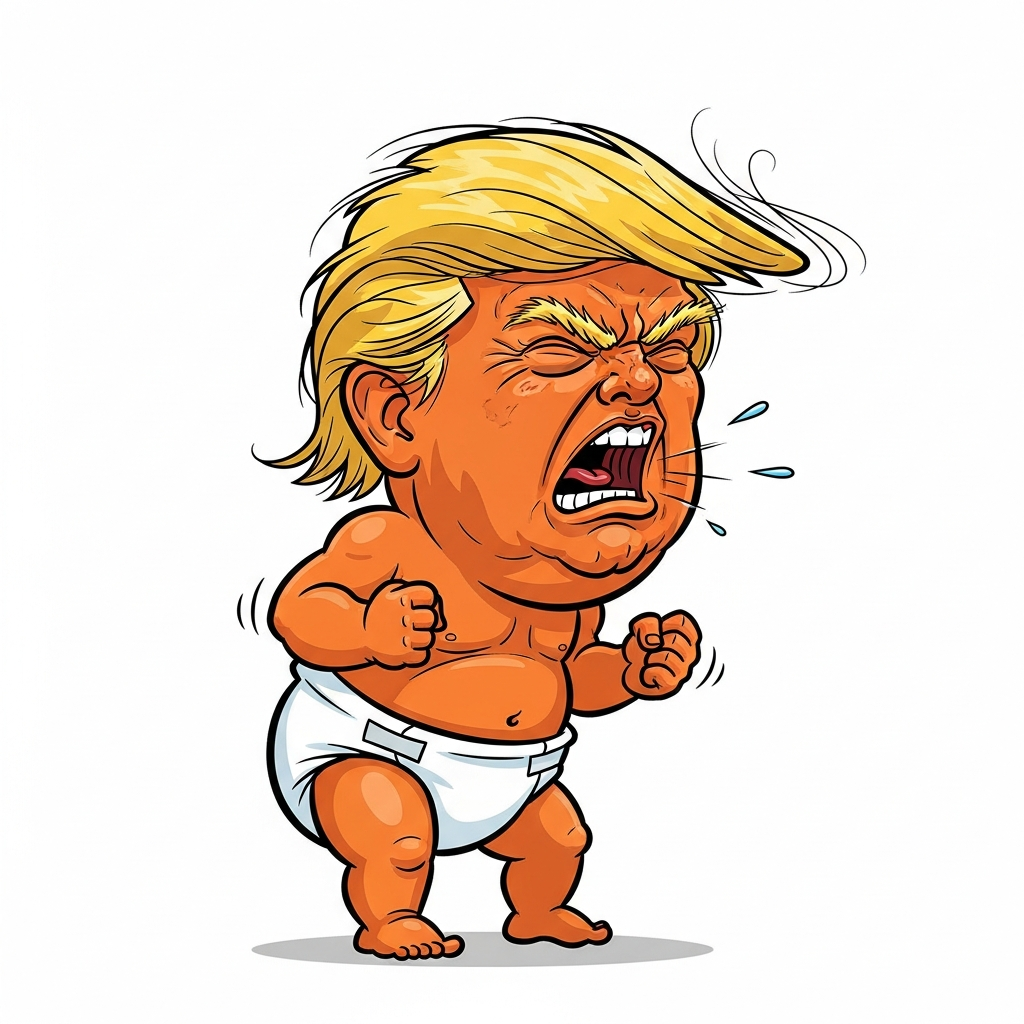
Supreme Court Overturns 90 Years of Precedent to Hand Trump Control of Independent Agencies
In a 6-3 ruling along ideological lines, the Supreme Court overruled Humphrey's Executor v. United States — the 1935 precedent that protected independent agency commissioners from politically motivated firings — and upheld Trump's removal of FTC Commissioner Rebecca Slaughter. Justice Sotomayor wrote in dissent that the majority had given the president 'a power unknown even to the English Crown.'
Ninety Years, Vacated in a Single Term
In May 2025, Trump fired Federal Trade Commissioner Rebecca Kelly Slaughter without notice and without cause. The Federal Trade Commission Act, on the books since 1914, allows a sitting president to remove a commissioner only for “inefficiency, neglect of duty, or malfeasance in office.” Trump cited none of those things. The letter Slaughter received told her that her “continued service on the FTC is inconsistent with this Administration’s priorities.”
That removal, by every standard the country had applied since the New Deal, was illegal. In 1935, in Humphrey’s Executor v. United States, the Supreme Court unanimously held that Congress could shield the heads of independent regulatory commissions from at-will firing by the president. The point of those agencies — the FTC, the National Labor Relations Board, the Securities and Exchange Commission, the Federal Communications Commission, the Federal Reserve — was that they would regulate banks, broadcasters, monopolies, and union disputes free from the political whims of whoever was in the Oval Office at the moment.
On June 29, 2026, six justices erased that doctrine. Writing for the majority in Trump v. Slaughter, Chief Justice John Roberts held that Article II of the Constitution vests “the executive Power” in the president alone, and that Congress cannot meaningfully constrain his power to fire executive-branch officers. Humphrey’s Executor, Roberts wrote, was wrongly decided. Ninety years of regulatory architecture — built by Congress in the wake of the Great Depression precisely to limit the kind of presidential capture the country was now witnessing in real time — was reduced to a footnote.
The Dissent
Justice Sonia Sotomayor, joined by Justices Elena Kagan and Ketanji Brown Jackson, wrote a dissent that read less like a legal argument than a warning. The majority, Sotomayor wrote, had given the president “a power unknown even to the English Crown against which the Founders revolted, elevating him above his once-coequal branches.” During oral argument, Kagan had put it more plainly: overturning Humphrey’s Executor would hand a president “massive unchecked, uncontrolled power.”
That description is no longer hypothetical. The Court did not strike down the FTC, the NLRB, the SEC, or any of the dozens of agencies that regulate American economic life. It left them standing. It simply ruled that a president can now fire any commissioner on any of them — at any time, for any reason, or for no reason at all. Bipartisan-by-statute commissions can be packed with one party overnight. Career regulators can be told that their continued service is inconsistent with the administration’s priorities. There is no longer any meaningful daylight between an “independent agency” and a cabinet department whose secretary serves at the president’s pleasure.
The Federal Reserve Carve-Out
In a separate ruling issued the same day, the Court told Trump he could not — at least for the moment — fire Federal Reserve Governor Lisa Cook, whom he had purported to remove in August 2025 over a manufactured accusation of pre-confirmation mortgage fraud. Roberts wrote, in a footnote, that the Federal Reserve was historically and structurally distinct from other independent commissions, and that Trump had not given Cook adequate process. He pointedly added that nothing in the ruling prevented Trump from “trying again.”
The carve-out for the Fed is not principled. It is pragmatic. A president who can fire the chair of the Federal Reserve at will is a president who can crash global markets in an afternoon. Roberts knows this. The bond markets know this. The decision to spare Cook for now while gutting every other independent commission tells the reader exactly what the Court was willing to do and what it was willing to be blamed for: it would hand Trump the regulators, but not — yet — the printing press.
What This Means in Practice
Before the Court agreed to hear Slaughter, it had already cleared the way for Trump to fire members of the National Labor Relations Board, the Merit Systems Protection Board, and the Consumer Product Safety Commission. After today’s ruling, every commissioner on every independent agency in the federal government serves at Trump’s pleasure. The bipartisanship requirements written into the FTC, the Federal Election Commission, and a dozen other statutes are dead letters; a president who wants a 5-0 commission of his own loyalists can have one by lunchtime.
This is the structural change Slaughter will be remembered for. The case was not really about Rebecca Slaughter. It was about whether the federal regulatory state — the part of American government most insulated from the day’s politics, the part designed in the 1930s to keep markets honest and consumers safe and workers heard — would continue to exist as a meaningfully independent thing. Six justices said no.
The Pattern
Trump did not, by himself, overturn Humphrey’s Executor. The Court did. But he asked them to, and they did it for him, and that has been the pattern of his second term: ask for a power the Constitution does not appear to give him, refuse to take no for an answer when lower courts say so, and wait for the conservative majority on the Supreme Court to invent the doctrine that makes it lawful.
Each of these wins compounds. Trump v. United States in 2024 gave him criminal immunity for “official acts.” The major-questions doctrine has gutted Congress’s ability to delegate regulatory authority to expert agencies. The end of the Chevron deference doctrine moved interpretive power from those agencies to courts staffed by his appointees. And now Slaughter lets him fire the agency heads outright. The presidency Trump is exiting his second term with is not the one he inherited. It is a different office, with different powers, against a Congress and a regulatory state that have been progressively stripped of the tools they once had to push back.
Roberts wrote the majority opinion. He has now signed his name to the doctrinal infrastructure of the unitary executive his Court will be remembered for building. The independence of the federal agencies — the achievement of the New Deal, the assumption of every American who ever filed a consumer complaint or trusted a financial regulator to be neutral — is over. It ended on a Monday in June, 6 to 3.
Sources
- Court allows Trump to fire FTC commissioner and overturns major restraint on presidential power — SCOTUSblog, June 29, 2026
- Supreme Court expands presidential firing power, overturning 90-year-old ruling — CBS News, June 29, 2026
- Supreme Court cements Trump's power over agencies long considered independent — NPR, June 29, 2026
- Supreme Court expands Trump's power over the federal bureaucracy — Washington Post, June 29, 2026
- Supreme Court lets presidents fire independent regulators, rules for Trump in FTC case — CNBC, June 29, 2026
- Trump v. Slaughter, 25-332 (Slip Opinion) — Supreme Court of the United States, June 29, 2026