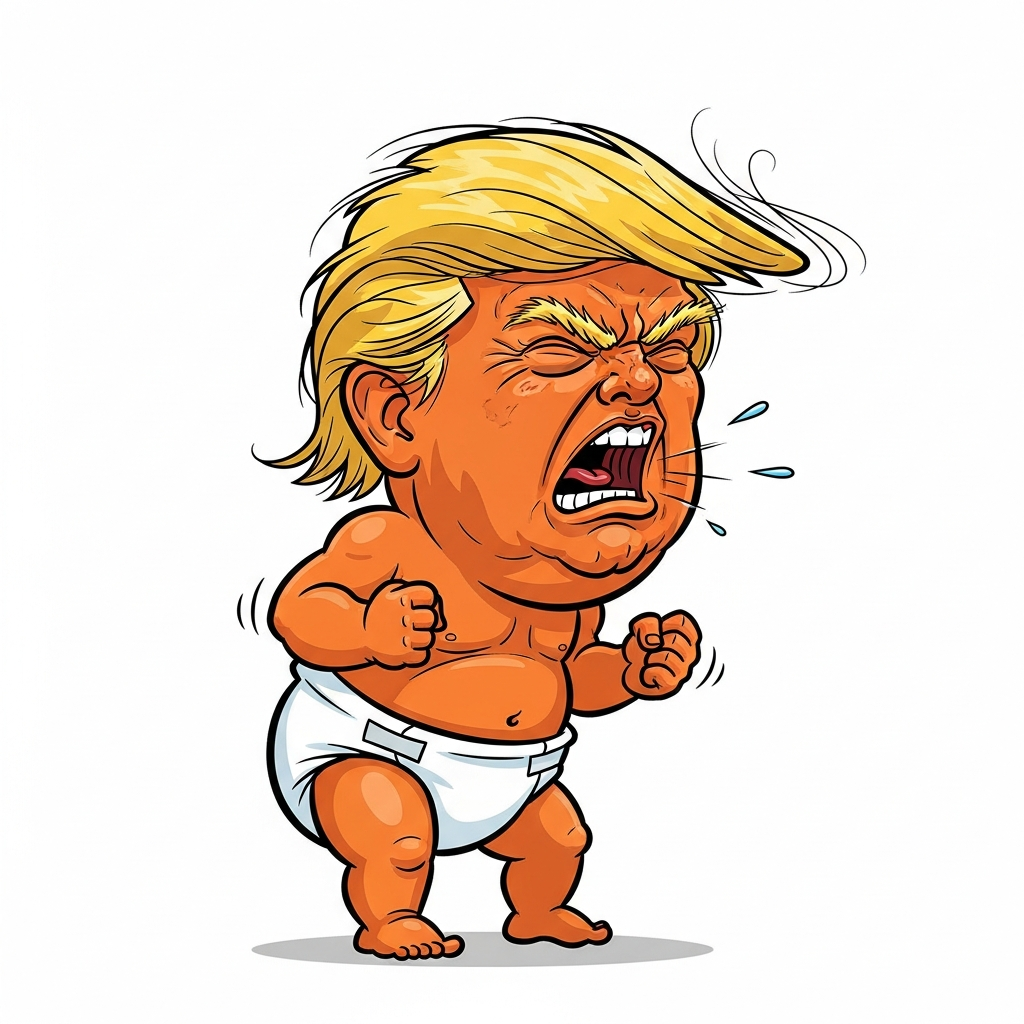
Supreme Court Tells Trump He Cannot Abolish Birthright Citizenship by Executive Order
In Trump v. Barbara, a cross-ideological 6-3 Supreme Court majority struck down Executive Order 14160 and upheld birthright citizenship under the 14th Amendment. Chief Justice Roberts, joined by all three liberal justices and Justice Barrett, ruled that children born in the United States are citizens regardless of their parents' immigration status — reaffirming a 128-year-old precedent Trump's team had tried to erase.
On day one of his second term, Donald Trump signed Executive Order 14160 and declared that the United States would no longer recognize birthright citizenship for children born to undocumented immigrants or parents on temporary visas. Every federal court that reviewed the order called it what it was: unconstitutional. On June 30, 2026, the Supreme Court agreed, 6-3.
Trump v. Barbara is a direct rebuke to one of the signature policies of Trump’s second term — and a constitutional ruling that cannot be undone by executive order, agency action, or even a future Congress working alone.
The Order Trump Signed, and the Law It Ignored
Executive Order 14160, signed January 20, 2025, directed federal agencies to deny citizenship documentation to children born in the United States if their mothers were undocumented or on temporary visas. It was an attempt to rewrite the 14th Amendment’s Citizenship Clause through executive fiat.
The 14th Amendment states: “All persons born or naturalized in the United States, and subject to the jurisdiction thereof, are citizens of the United States.” Since United States v. Wong Kim Ark in 1898, that language has been understood to include all children born on American soil regardless of their parents’ immigration status. The Court in 1898 ruled that Ark — the American-born son of Chinese immigrants who were legally barred from citizenship by the Chinese Exclusion Act — was a citizen by birth. The principle has been settled law for 128 years.
Trump’s order told executive agencies to ignore it.
The Court’s Answer
Chief Justice John Roberts wrote the majority, joined by Justices Sotomayor, Kagan, Barrett, and Jackson. It is a notably unusual coalition: Barrett, a Trump appointee, crossed the conservative bloc. The four liberal justices were joined by the two most institutionally minded members of the Court’s right flank — Roberts for the majority, Barrett making it five.
Roberts grounded the ruling in the text and original history of the 14th Amendment, reaffirming Wong Kim Ark and rejecting the administration’s argument that the Citizenship Clause applied only to children of permanent residents. The administration had relied on 19th-century writings and on Elk v. Wilkins (which excluded Native Americans living on reservations from citizenship) to argue that “subject to the jurisdiction thereof” meant something narrower than universal birthright. Roberts rejected those readings.
His concluding framing was direct: “Citizenship, then and now, was the right to have rights — to freely participate in our political community. The Framers of the Fourteenth Amendment extended that promise to ‘every free-born person in this land.’ We keep that promise today.”
At oral argument, Roberts had turned to the Solicitor General with a similar formulation: “Well, it’s a new world. It’s the same Constitution.”
The Dissenters Who Wanted to Go Further
Justices Thomas and Alito filed separate dissents. Thomas, joined by Gorsuch, argued that Wong Kim Ark had been wrongly decided and applied only to children of legal permanent residents. Alito went further still, calling the ruling “one of the most important decisions in the history of the Court” — while characterizing it as “a serious mistake” and explicitly calling for Wong Kim Ark to be overturned.
The willingness to unwind a 128-year-old precedent says everything about the ideological ambition of the current Court’s right flank. Alito’s dissent is not a statement about the case before the Court — it is a roadmap for the next attempt.
What This Ruling Does and Doesn’t Settle
The ruling is final on constitutional grounds: the 14th Amendment guarantees birthright citizenship, and the executive branch cannot abrogate it. EO 14160 is dead. The approximately 150,000 children born each year to undocumented immigrants or temporary visa holders remain citizens at birth.
Justice Kavanaugh, in a concurrence, agreed the order was unlawful but took a narrower path — resting on statutory grounds rather than the Constitution. His approach was notable: by leaving the constitutional question technically open, his concurrence preserved the possibility that a future Congress might try to address birthright citizenship through legislation. Constitutional scholars widely regard that path as foreclosed by the majority’s direct 14th Amendment ruling, but Kavanaugh’s exit ramp signals ongoing tension within the conservative bloc.
The Same Constitution
Trump entered his second term with a strategy of governing through executive orders that tested the outer limits of presidential power, calculating that a conservative Supreme Court would validate the aggression. On this case — one of his signature campaign promises — the Court said no. The margin was 6-3, the majority opinion was written by his first-term chief justice, and the legal reasoning rested on text and precedent that have governed American law since the Reconstruction era.
Some constitutional guardrails remain. The question is how many will survive the next attempt.
Sources
- Birthright citizenship upheld by Supreme Court ruling against Trump order — The Washington Post, June 30, 2026
- The Supreme Court upholds birthright citizenship, rejecting Trump's executive order — NPR, June 30, 2026
- Takeaways: Supreme Court rebukes Trump on birthright citizenship — CNN, June 30, 2026